
Headless CMS development for Nordic companies

Engineer-led headless CMS delivery for enterprises and scale-ups across Denmark, Sweden, Norway, Finland, and Iceland

What we build for Nordic teams

FocusReactive builds enterprise websites, content platforms, and headless architectures for teams across Denmark, Sweden, Norway, Finland, and Iceland. We handle migrations from legacy CMSs, structured content models, complex multilingual publishing with local currency logic (SEK, NOK, DKK, EUR), compliance with strict Nordic accessibility laws (WCAG 2.1/2.2), integrations, and long-term support.

Built for Nordic teams and enterprise delivery

We work with distributed teams across the Nordics and design for practical collaboration, clear ownership, and production-ready shipping. We align with the Nordic work culture: flat hierarchies, complete transparency in our engineering processes, and a pragmatic "no-nonsense" approach to solving complex architectural problems.

Nordic project we’ve shipped

77
modular components
368
pages migrated
1,5K+
media assets optimized
215
CMS components created

Why Nordic teams choose us

# 1
Architecture designed for complex multilingual publishing, automated translation workflows, and cross-border currency/market variations.
# 2
Working cadence that fits distributed Nordic teams, matching CET/EET time zones with proactive, transparent, and flat-hierarchy communication.
# 3
Structured content models that support governance, localization, and strict regional compliance (EU/Nordic Data Residency and Accessibility).
# 4
Proven delivery across enterprise websites, replatforms, and composable builds for Nordic tech leaders.

Core headless CMS services for Nordic businesses

Built for Nordic enterprise and scale-up teams that need multilingual publishing, market-by-market governance, localized tech integrations, and high-performance delivery across regions.

Discovery and architecture

Discovery starts with the content model, the governance rules, and the platform fit. For Nordic websites, that means validating multilingual structures, market-specific publishing workflows, and how the CMS sits inside a composable stack with CRM, Nordic-heavy PIMs (like Inriver), localized payment gateways (Klarna, MobilePay, Swish), and identity providers (BankID).

Implementation and build

Implementation work in the Nordic market usually starts with a headless CMS setup and the integrations that connect it to the rest of the stack. As a specialized next js agency, we map content models, wire up editorial workflows, and tune frontend performance to meet the expectations of Nordic users operating on hyper-fast 5G networks, where sub-second load times are the baseline.

Migration and content modelling

Migration starts with the content model, not the frontend. We audit the existing CMS, map pages, components, taxonomy, and metadata into reusable field structures, then build redirects, canonical rules, and structured content so the move stays searchable.
For Nordic organizations, localization has to be part of the model from day one. That means smart language fallbacks, market-specific fields, translation workflows (integrated with tools like Crowdin/Lokalise), and publishing rules that let teams operate across Swedish, Norwegian, Danish, Finnish, and Global English sites without turning every update into a manual rewrite.

Support and optimisation

We stay involved after build to handle support, governance, and ongoing optimization. That means performance tuning, content model refinements, and continuous accessibility audits (ensuring ongoing compliance with the EU Web Accessibility Directive and local acts like Norway’s UU-tilsynet).

Signs your current CMS is holding back growth

01

Your editors are blocked by language workflows

Multilingual workflows slow Nordic teams down when every market needs its own version of the same content. The bottleneck is usually manual translation, inconsistent localisation structure, and approval chains. Editors end up manually duplicating pages for Sweden, Norway, and Denmark instead of relying on a centralized, localized content schema.

02

Governance gets harder as the site grows

As Nordic sites and brands grow, governance gets harder: more approvals, tighter permissions, and more people touching the same content system. Furthermore, managing GDPR compliance and user consent across different Nordic jurisdictions becomes chaotic. A headless CMS gives you the controls to keep content consistent and compliant without slowing the organisation down.

03

Performance drops across markets and devices

Performance drops when a site has to serve multiple Nordic markets, translated content, and media at scale. Nordic consumers have some of the highest digital expectations globally; if your site doesn't load instantly, they bounce. Core Web Vitals suffer first. The fix is a lean stack, properly optimised assets, and a delivery layer that doesn't add work on every request.

04

Integrations are fragile and expensive to maintain

Composable architectures only work when integrations are treated as part of the system, not a bolt-on. In enterprise Nordic environments, brittle connections between CRM, ERP, regional PIMs, local fintech solutions, and internal APIs create hidden maintenance work. The right approach is to design stable interfaces and clear data contracts.

05

Product, marketing, and content teams operate in silos

When product, marketing, and content teams work across countries and languages, content slows down fast. A headless setup keeps the model consistent, so each team can work from the same source without rebuilding everything for every market.

Headless CMS projects and modern platform work

1 3

Enterprise website modernisation

Enterprise website modernisation should improve performance without making content teams depend on developers for every update. We rebuild the front end with a modern stack, simplify the content model, and give editorial teams the independence to publish across markets. For Nordic enterprises, that means faster pages, easier maintenance, and a platform built to scale beyond the Nordics into the broader EU and US markets.

2 3

Composable content platforms

Composable content platforms fit Nordic companies that need integrations, localization, and room to scale. They connect CMS, product data, search, translation, and headless commerce (managing complex DKK/SEK/NOK/EUR pricing structures) without forcing every market into the same shape.

3 3

Headless CMS migration and replatforming

Headless CMS migration in the Nordic region starts with content mapping, so you know exactly what moves, what gets restructured, and what should be retired. We phase the replatforming to reduce risk, preserve SEO with redirects, and keep delivery under control.

Trusted by product teams building for multiple Nordic markets

“FocusReactive helped us design and build a modern, high-performing website that delivers strong UX and conversion capabilities while enabling full independence for our marketing team. The new platform, built on the Storyblok CMS, is faster and more scalable, allowing us to create and manage content without relying on developers. The team delivered on time with proactive communication, weekly updates, and continuous improvements. They were highly responsive, technically strong, and great to work with, making the entire collaboration smooth and effective.”

Patricia Åkerman
Head of Marketing, xWeather

FAQ about headless CMS development in the Nordics

Practical answers for Nordic teams evaluating headless CMS implementation, localization, governance, and multilingual migrations.

Our core engineering team operates across Europe, meaning we perfectly align with CET/EET time zones. We share the Nordic appreciation for flat hierarchies, direct communication, and transparency. You get real-time agile syncs and a tech partner who pushes back with better architectural solutions rather than just taking orders.

No. We are an engineer-led agency delivering high-density value. Nordic clients appreciate our pragmatic approach: we do not do outstaffing and we don't pad projects with junior developers. You work directly with senior architects and developers who take ownership of the product.

We build accessibility controls directly into the CMS (e.g., real-time color contrast checkers in the live preview) to ensure your content team naturally complies with strict Nordic accessibility laws. For data privacy, we structure your Headless architecture and deploy on infrastructure (like AWS or Vercel EU regions) that guarantees your data residency remains within the EU/Nordics.

Pricing depends on the scope of the content model, the volume and complexity of the migration, required integrations, multilingual needs, and the support you want after production.

Relevant reading for Nordic headless CMS teams

Choosing a Headless CMS in 2026: A Straight-Talk Guide
FocusReactive blog card titled Choosing a Headless CMS on dark background

Choosing a Headless CMS in 2026: A Straight-Talk Guide

The headless CMS market has matured. The platforms aren't that different on paper — they all promise editorial flexibility, API-first delivery, and developer happiness. Strip away the positioning and the differences become specific, architectural, and consequential. This opinionated guide tells you what each platform actually does well, where it falls short, and who should use it.
Best Headless CMS for React
Best Headless CMS for React with React logo on dark background

Best Headless CMS for React

Comparison of the best headless CMS options available on the market, including the best use cases and pricing models for each.
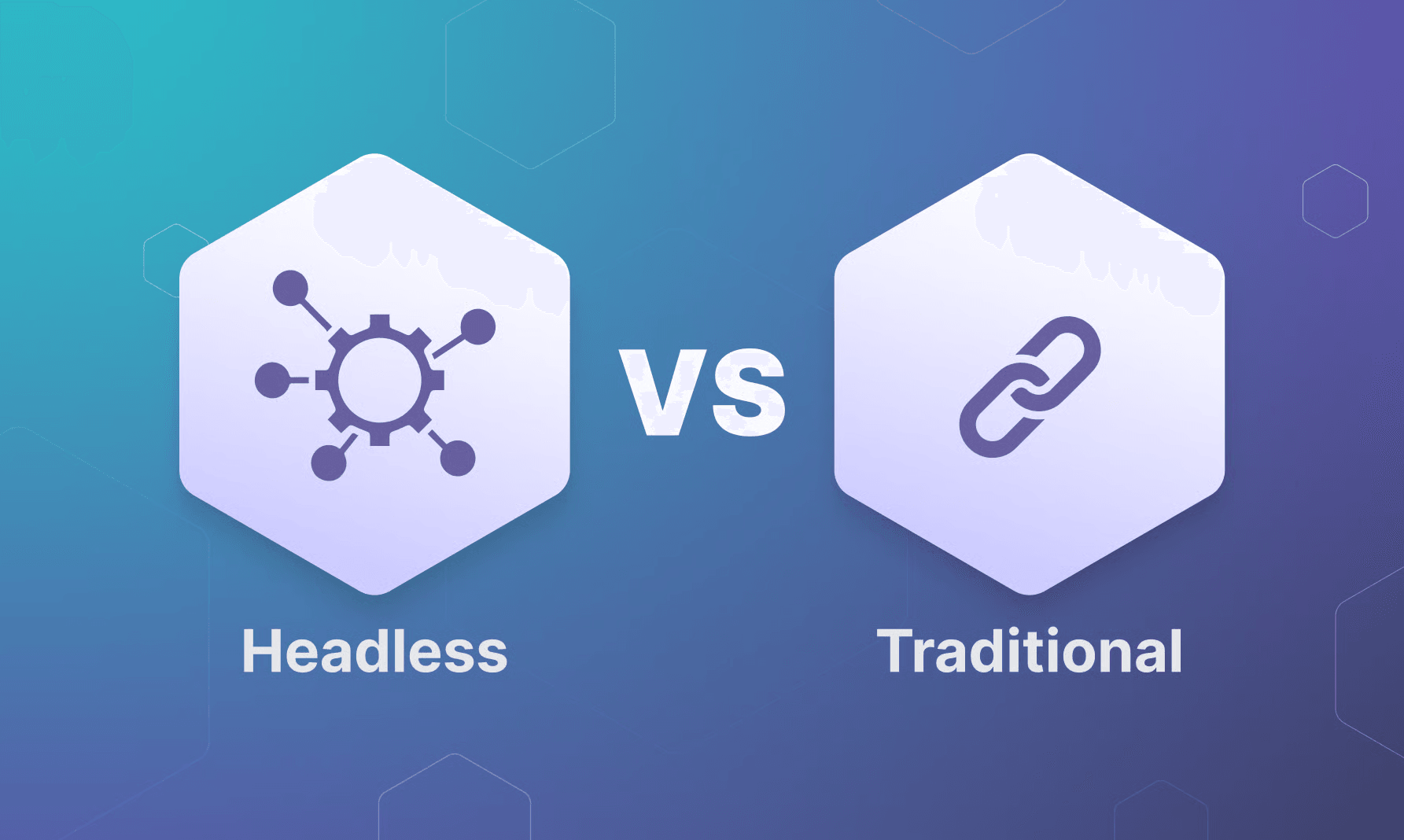
Headless CMS vs. Traditional CMS
Headless vs Traditional CMS comparison with hexagonal icons on gradient

Headless CMS vs. Traditional CMS

Headless CMS demand has grown because product teams want more freedom on the front end without sacrificing editorial control. The tradeoff is more architectural responsibility, which is exactly where the right implementation matters.

Start your Nordic headless CMS project

  • Talk through your platform, migration, or replatforming plan
  • Get architecture guidance for multilingual content and governance
  • Plan delivery around performance, integrations, and editorial workflows
Subject
Estimated Budget (EUR)
Timeframe