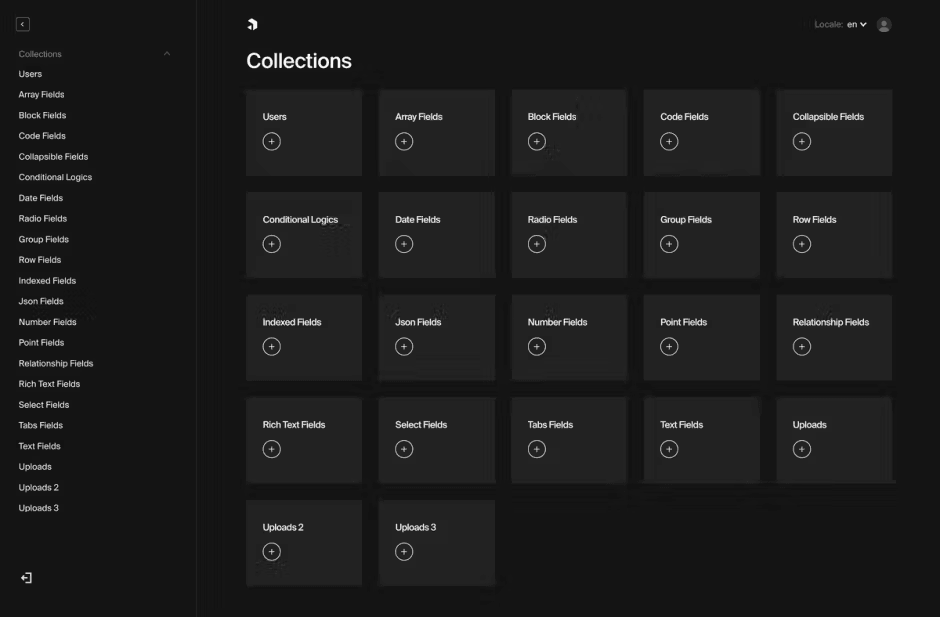
Payload CMS overview
Discover how Payload CMS combines the power of headless content management with developer-focused features for project flexibility and control.


Kids Empire, a fast-growing family entertainment brand, was expanding rapidly, but its corporate website couldn’t keep up. Their marketing team faced an immediate roadblock: the modern Next.js site was entirely hardcoded. Every new landing page, every text update, and every campaign required a developer, creating a significant bottleneck that stifled marketing agility.
The company needed to move at the speed of its growth. This meant empowering the marketing team with full content autonomy, building a system to seamlessly launch and manage 100+ park locations, preparing for expansion by adding Spanish for the U.S. market and French for the Canadian market, and fixing critical gaps in technical SEO and web accessibility—all within a tight 2-month deadline.
Composable UI Design & Scalable Headless Architecture

We replaced hardcoded layouts with a composable design system using Tailwind CSS. By breaking the UI into 38 reusable blocks, marketing can visually build pages without developers, while a custom in-editor WCAG checker ensures accessibility by default.

Powered by Payload CMS and Next.js, we eliminated IT bottlenecks. A custom Location Engine bulk-imports 100+ parks with live Google Places data, while a multi-tenant architecture supports 3 languages—delivering 100% marketing autonomy and lightning-fast performance.
As an engineer-led, AI-native agency, we delivered a high-performance content system designed for marketing autonomy and operational scale. We replatformed the entire digital presence to a headless architecture using Payload CMS and Next.js, focusing on reusable components and automated workflows. We engineered a system that gave the marketing team back control:


A headless CMS powered by TypeScript and Node.js, providing you with complete command over your data models, API, and business rules.

A React framework for fast, SEO-friendly web apps with server-side rendering and static site generation.

A powerful open-source relational database for web, mobile, and analytics applications.