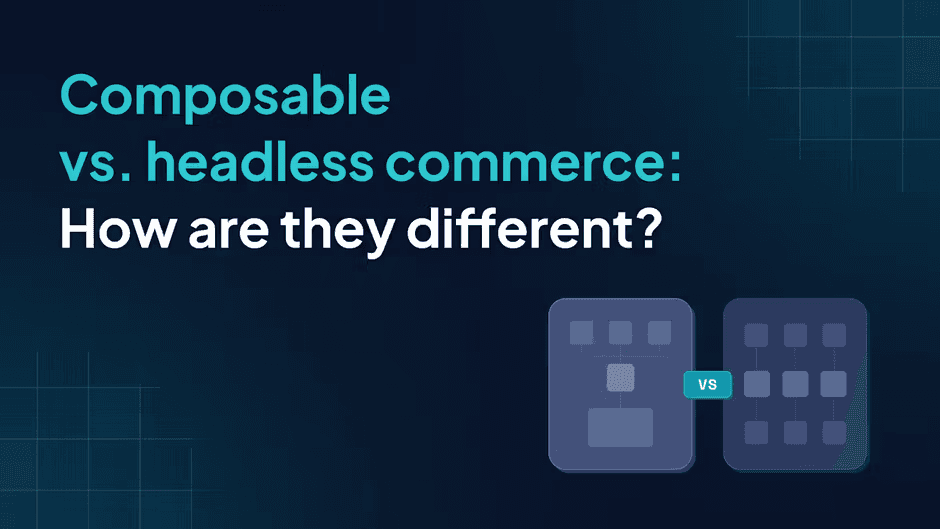
Headless vs Composable: What’s Best for Your Business?
Discover the differences between Headless and Composable architectures and learn which is best for your business


WooCommerce is the undisputed king of entry-level e-commerce, offering an accessible starting point for WordPress users. However, as transactional volume grows and catalog complexity increases, the limitations of a blogging platform masquerading as an e-commerce engine become painfully clear. Scaling WooCommerce inevitably leads to a fragile web of third-party plugins, slow checkout paths, and database performance bottlenecks.
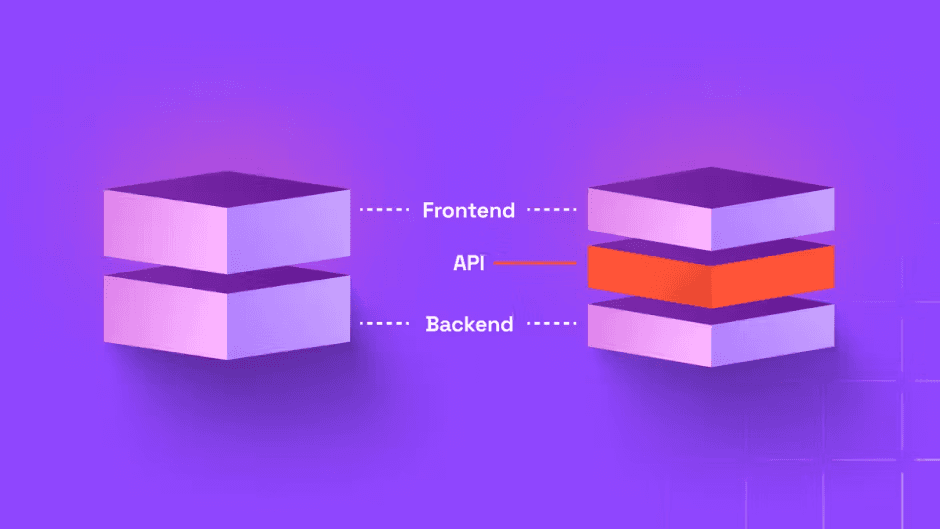
Medusa.js represents the architectural leap your business needs to scale. Designed from day one as a headless, open-source engine, it strips away the bloat of WordPress. By separating your store backend from the customer-facing frontend, Medusa.js transforms your products, customers, and regional logic into fast, highly accessible APIs.
This is not just a platform switch; it is a shift from maintaining a fragile website to owning a robust, scalable, and composable commerce ecosystem.
At FocusReactive, we combine deep engineering expertise with AI-native delivery to completely de-risk this transition. We rebuild your commerce infrastructure to be fast, highly reliable, and optimized for maximum conversion.


Migrating from WooCommerce means untangling years of database customizations and plugin metadata. As a headless cms migration agency, we ensure a smooth transition of your order history, customer profiles, and SEO. We don’t just copy tables; we sanitize and restructure your entire catalog:
Schema Normalization: We untangle WooCommerce’s EAV database design, converting nested metadata from the bloated wp_postmeta table into clean, Postgres-optimized JSONB fields within Medusa.js.
Unravelling Custom Fields: We translate ACF (Advanced Custom Fields) and product add-on data into structured JSON metadata native to Medusa.js.
Protecting SEO Traffic: We implement a meticulous 301-redirect strategy to map WordPress URLs to your new structure, ensuring zero disruption to search rankings.
Zero-Downtime Transition: Using automated validation scripts and parallel testing, we guarantee an instant, secure cutover without interrupting active shoppers.

Gain absolute control over site speed and customer journeys. We optimize page structures and data transfers to eliminate latency and maximize conversion rates.

Incorporate complex B2B workflows, subscription models, dynamic pricing, and custom validation rules directly into your core codebase—no unstable plugins needed.

Leverage Medusa’s native event bus (Redis-backed) for reliable, asynchronous queues. Integrate ERPs and PIMs without blocking user-facing processes.

Launch merchandising campaigns, adjust pricing, and update content on the fly. Your marketing team moves instantly, completely independent of backend release cycles.
We worked with FocusReactive to bring our website and blog into a single, modern setup that’s much easier for our team to manage. They rebuilt the pages based on our designs, migrated the blog to Payload CMS, and handled changes smoothly as the project evolved. Communication was quick and straightforward, and the end result is a flexible platform that will scale with us as our content and product grow.

FocusReactive helped us launch a high-performing website with 20% faster load times and 40% less manual work thanks to seamless integrations. Our team can now update content 50% faster, all delivered with clear communication and reliable project management.



You do not have to throw away your content. Because Medusa.js is headless, we can integrate it alongside your existing marketing site. We can turn your WordPress setup into a "Headless CMS" or migrate your marketing content to a modern visual CMS like Sanity or DatoCMS. Your marketing team keeps their editing experience, while your store gets the performance of Medusa.js.
WooCommerce stores often accumulate hundreds or thousands of dollars in annual licensing fees for premium plugins (subscriptions, checkout fields, SEO, caching, etc.). With Medusa.js, these features are either built-in natively, easily coded as lightweight customizations, or integrated through robust, modern API services. You trade unpredictable plugin fees for predictable, highly scalable hosting costs.
When done correctly, it will improve it. WordPress sites often suffer from poor mobile loading speeds and bloated code, which hurts search rankings. By migrating your frontend to Next.js and keeping your exact URL structures (or setting up robust 301 redirects), we maintain your organic traffic while giving you a massive boost in site speed—a factor Google highly rewards.
We write custom checkout rules, payment gateways, and shipping rate calculations directly into Medusa’s backend as TypeScript services. This ensures your custom business logic remains highly performant, secure, and completely independent of theme updates.



.png&w=1920&q=75)