
This article is part of a series focused on identifying the React CMS options, offering insights into the best NextJS CMS platforms for modern web developers and content creators.
TL;DR: When to Pick Strapi CMS
Strapi headless CMS is a solid pick when you need a flexible, API-first backend for custom web applications, various marketing sites, or e-commerce, and you want full control instead of SaaS lock-in. Strapi works best for teams building with React/Next.js that care about custom content models, omnichannel delivery, and the ability to extend the CMS with their own plugins. It’s a strong fit for startups and agencies that need fast iteration with no license fees, and for enterprises that require self-hosting, advanced RBAC, and integration with existing systems.
What is Strapi?
Strapi is an open-source, headless CMS that allows developers to easily create, manage, and distribute content. It is designed to work with the RESTful API and also supports GraphQL, making it a flexible choice for web developers who need a customizable and scalable content management solution. Built primarily on JavaScript, Strapi integrates seamlessly with React and other modern frameworks, which makes it an excellent choice for developing high-performance web applications.
Best Use Cases for Strapi
Dynamic Web Applications
Strapi is ideal for managing dynamic content in real-time web applications such as e-commerce sites, news platforms, and social media applications. Its API-driven approach allows for easy integration with various front-end frameworks, enabling a smooth content delivery process.
Multimedia Content Management
With robust built-in support for media handling, Strapi CMS can efficiently manage extensive libraries of images, videos, and other media types. It’s particularly useful for media outlets or content-rich websites requiring sophisticated media organization and fast retrieval.
Customizable API
Strapi is at its best when you need custom APIs. It lets developers to extend its functionalities with custom plugins and hooks, making it adaptable to a wide range of industry-specific needs, such as custom e-commerce solutions or community platforms.
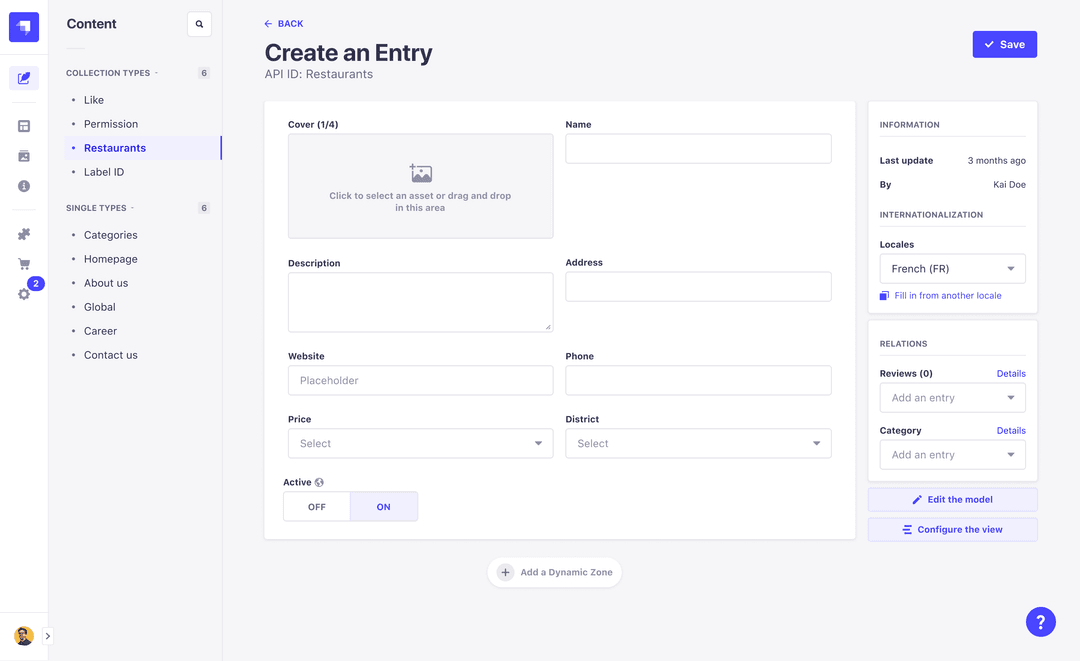 Strapi interface
Strapi Advantages
Flexibility and Scalability
As a headless CMS, Strapi offers unmatched flexibility in how content is served and consumed. Developers can use their preferred tools and frameworks to create the front end, allowing the use of Strapi APIs to deliver content across multiple channels, from websites to mobile apps and IoT devices.
Community and Customization
Strapi has a large and active community, contributing numerous plugins and extensions that enhance its core capabilities. The ability to modify the admin panel and APIs means it can be precisely tailored to specific project requirements.
Enhanced Security
With Strapi, security is a priority. It provides robust user authentication and permissions management features out of the box. Developers can further secure Strapi instances using custom security policies, ensuring that data handling is compliant with global standards.
Ease of Use
Despite its powerful features, Strapi remains user-friendly for content creators. The admin panel is intuitive, making it easy for non-technical users to manage content effectively without ongoing developer assistance.
Drawbacks of Strapi
Learning Curve
While Strapi is flexible, it does require some initial learning, especially for those not familiar with JavaScript or backend development.
Performance Issues
In cases of extremely high traffic, Strapi can encounter performance bottlenecks if not properly optimized or scaled.
Dependency on Third-Party Plugins
While the plugin community is strong, reliance on third-party plugins can lead to issues with stability and updates, especially if plugins are not actively maintained.
Ideal Project for Strapi
Strapi is ideal for custom web applications, e-commerce platforms, and multimedia content management where flexibility and scalability are crucial. Its ability to integrate seamlessly with various technologies makes it a top choice for developers who need a highly customizable and dynamic CMS.
Conclusion
If you’d like to migrate your project to Strapi or you are building it from scratch, get in touch, and we can set up a free consultation around the project you have in mind.
We are the headless CMS experts. Whether it’s a new e-commerce platform, a multi-language publication, or a feature-rich corporate website, Strapi offers the tools and flexibility to meet and exceed your project requirements.