5 Red Flags Your Headless CMS Needs a Rebuild
A CMS was never created “just because.” It exists to solve real problems: editorial independence, structured content, multi-channel delivery, and efficient operations. The large variety of CMS platforms on the market proves exactly that — different choices for different needs. [The large variety of CMS platforms on the market proves exactly that — different choices for different needs.](https://focusreactive.com/choosing-a-headless-cms/) Different as they are, almost all of them can suffer the _same_ architectural and operational issues. The worst part is these problems don’t appear immediately. They emerge over time, quietly compounding. Teams adapt. Workarounds become habits. Friction becomes “just how it works.” This article helps you identify those issues before they start slowing your product and team down.

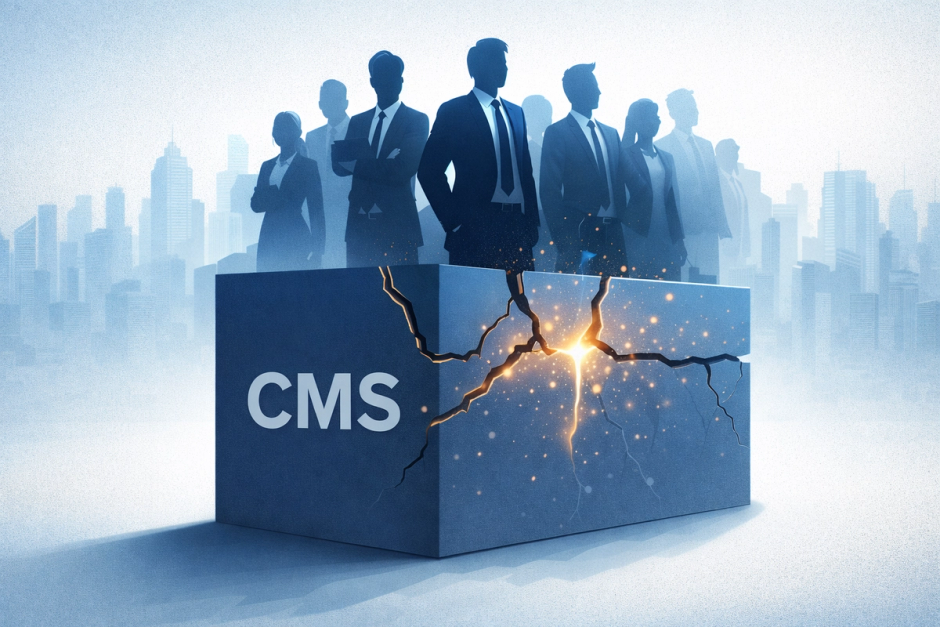
1. Every New Page Type Requires Developer Work
One of the reasons teams choose headless CMS is to decouple content from presentation — to give marketing autonomy without sacrificing engineering control. The reality in many projects is quite different.
A new landing page request turns into a ticket.
A layout change means a pull request.
A new section variation requires React code and a deploy.
That decision compounds over time.
If your marketing team cannot configure new page types without engineering cycles — and your frontend (e.g., Next.js) tightly couples layout logic to content shape — your CMS is acting like a glorified database, not a composable content system.
A truly composable model has:
- Content structures that reflect editorial intent rather than frontend implementation,
- Blocks that can be assembled by non-engineers,
- A rendering layer that interprets structure, not enforces it.
That separation is what makes editorial independence real.
2. Localization Is a Mess
Localization is easy when you start with a single language. It becomes painful once you scale to multiple regions, variants, and regulatory requirements. And if your model treats locales as separate content types or duplicate entries, you’re building operational debt.
The core challenge with localization is not translation itself — it’s modeling localized content in a way that supports:
- Structured fallbacks,
- Per-region overrides,
- Role-aware workflows,
- Governed approvals,
- Consistent delivery across channels.
If editors are exporting spreadsheets, manually syncing translation exports, or constantly resolving conflicts between locale versions, the underlying content model isn’t fit for scale. Localization doesn’t just multiply content volume — it multiplies complexity.
If you’re evaluating CMS platforms specifically through the lens of scalability and multi-market growth, this comparison is a useful reference.
3. Schema Changes Feel Risky — So They Don’t Happen
We’ve seen this pattern many times: someone proposes a content model improvement — to split a field, normalize a type, or add a cross-brand reference — and the room goes quiet.
“Let’s not touch the schema.”
“It might break production.”
“We need a full migration plan.”
That’s a fragility signal, not caution.
A healthy headless CMS model should evolve. If schema changes require locked releases across editing and frontend layers, you’ve essentially embedded a hidden dependency between your CMS and your presentation layer. Frontend components expect exact shapes. APIs aren’t versioned. A small change can trigger a chain reaction across teams.
That’s not agility.
That’s purposeful immutability hidden behind fear.
Real flexibility comes from models with:
- Versioned schemas,
- Clear deprecation paths,
- Safe migrations or preview channels,
- Decoupled frontend assumptions.
When schema changes feel risky instead of routine, the architecture is slowing you down.
4. Your “Headless” CMS Still Couples Content to the Frontend
Headless in name, monolithic in practice — this is one of the most common anti-patterns we encounter. Teams think moving to an API-first CMS solves coupling. It doesn’t.
If your frontend embeds business rules, navigation structures, presentation tokens, content hierarchy assumptions, and page type logic, then every content change risks breaking the UI.
A true architectural separation has:
- Content as pure structured data,
- Rendering logic isolated and stable,
- API contracts that evolve independently,
- UI components that interpret data rather than dictate its shape.
If your backend model sees changes ripple into React and deployment pipelines, then your CMS hasn’t freed you from template coupling — it’s just moved it.
For practical guidance on choosing the right CMS that fits your architecture — not just your immediate needs — see our comparison of popular headless CMS platforms. :contentReference[oaicite:3]{index=3}
5. You’ve Built Workarounds on Top of Workarounds
Workarounds tell a story. One script to fix references. Another to sync languages. A middleware layer to reshape API responses. A separate system to preview content versions.
Individually, these seem practical. Collectively, they signal misalignment between your CMS capabilities and your operational reality.
Workarounds increase:
- Maintenance overhead,
- Onboarding friction,
- Quality risks,
- Hidden technical debt.
When teams are spending more time maintaining glue code than improving product value, the CMS is no longer serving you — you are serving it.
Optimization vs. Rebuild
Not every friction point means you need to change platforms. Sometimes it means:
- Redesigning your models,
- Refactoring the frontend to decouple layout assumptions,
- Introducing schema versioning and governance workflows,
- Adding preview layers.
But when the architecture itself blocks change, not just features, incremental fixes won’t suffice.
A CMS should make iteration easier over time.
If it’s making iteration harder, it’s time to rethink the foundation.
If this article describes problems you’re living with, that’s a sign worth investigating further. We’ve helped teams restructure brittle content models, decouple rendering layers, and migrate to architectures that support growth — without losing editorial independence or developer velocity.
Let’s talk about where you are and where you want to go.
More posts on related topics
How to Choose a Headless CMS in 2026: A Straight-Talk Guide
Not sure how to choose a CMS? Compare Contentful, Sanity, Storyblok, Payload, and more — with clear defaults for enterprise, marketing, and content operations teams.

Payload CMS: Scalable Headless CMS for Developers
Discover how Payload CMS combines the power of headless content management with developer-focused features for project flexibility and control.
Best Headless CMS for React and Next.js in 2026 (G2 Ratings)
Discover the best Next.js headless eCommerce platforms in 2026. Compare Shopify Hydrogen, Saleor, Medusa, and Commerce Layer built for React CMS-powered online stores.
Are Headless CMS Being Replaced by AI Agents?
Discover how AI-powered headless CMS platforms use agentic workflows to automate, optimize, and evolve your content in 2026. Compare Sanity, Payload & Storyblok CMS, their workflows and which architecture works best for which team.
Sanity CMS Explained: Features, Use Cases & Why Teams Choose It
Discover why headless CMS Sanity is the go-to choice for agencies and development teams who need flexible content structures and multi-channel delivery.
Vercel: Expert Next.js Deployments for Headless CMS & E-commerce
Vercel powers Next.js-first headless CMS and e-commerce deployments with edge caching, serverless functions, and global scalability. This guide shows web agencies how Vercel's instant deploys, analytics, and collaborative workflows accelerate headless projects from prototype to production.