Multi-Tenant CMS & Domains Consolidation

Run all your brands, markets and domains from one headless CMS and one Next.js codebase

Why Legacy Stacks Fail Multi-Brand

01

Duplicate Tech Debt

Separate CMS instances multiply costs and dev time. Updating one global feature turns into maintaining 10 different codebases.

02

Inconsistent Brand Experiences

Without a shared component library, UI/UX drifts across regions. Global updates become painfully slow.

03

Content Silos & Translation Overhead

Disconnected domains force teams to manually copy-paste content and translations, slowing time-to-market and causing errors.

04

The "White-Label" Nightmare

Traditional platforms lack fallback logic. Enterprises need a global "master" page that local teams can inherit, tweak, or override.Traditional platforms lack fallback logic. Enterprises need a global "master" page that local teams can inherit, tweak, or override.

Our Solution

At FocusReactive, we design and build multi-tenant Headless CMS architectures (Sanity, Storyblok, Payload CMS) powered by a single Next.js monorepo. We don’t just merge databases; we re-architect your content model so you can share what’s common and isolate what’s unique.

The result: Your marketing team operates from a single command center. You can spin up a new market or a sister brand in weeks—or even days—by reusing your existing component library. Developers maintain one codebase, while content editors get the flexibility to tailor campaigns for specific locales or brands.

What We Implement

Monorepo & Shared Components: One UI library across all brands for instant, unified feature rollouts.
White-Label Inheritance: Global "master" content that local editors can fallback to, fork, or override for their market.
Multi-Tenant Workflows: Strict role-based access (RBAC) so editors only manage their specific brands or locales.
Automated Global Rollouts: Update a shared asset once, propagate it across dozens of domains instantly.
AI Content Ops: Built-in AI translation workflows that respect each brand's unique tone of voice.
Deep Dive & Proof Points

For an iGaming giant across US states, we engineered a custom labels system in Sanity (165k+ docs). A global "White Label" document serves as the default, but local state teams can "fork" and override it to meet strict local regulations.

Proof Point

  • "Fork & Override" System: Local editors can fork, hide, or reset global master documents without affecting other states.
  • 5-Stage Environments: Custom routing through Draft → Integration → Staging → Regulator → Production.
  • Audit Log Plugin: Immutable tracking of every editor's action to satisfy compliance and regulators.
  • Environment-Specific Tokens: Custom API filtering to ensure each app fetches only its specific state/environment data.

[View Tipico Platform Case Study]

Read more — 01. The "White-Label" Compliance Engine

Built a shared component library on Storyblok + Next.js to run multiple iGaming projects from one CMS. High reusability allowed the client to launch a second standalone brand in just 2 weeks with sub-100ms global load times.

Proof Point

  • Global & Local Configurations: Shared elements (like banners) update globally but can be overridden at the page level.
  • Live Visual Editor: Marketers build cross-channel campaigns using drag-and-drop with real-time preview.
  • Scheduled Publishing: Automated workflows for time-sensitive promotions and multi-brand campaigns.
  • Advanced Next.js Caching: Delivers a 90% cache hit rate for near-instant page loads.

[View Betway Case Study]

Read more — 02. Launching Brands in 2 Weeks

Migrated mobility apps to a Payload CMS monorepo powering both NL and IT markets. Integrated AI-assisted translations cut localization time from weeks to days, keeping infrastructure costs flat as they scale to new countries.

Proof Point

  • AI-Assisted Translation: Automated per-document translation with a strict human-review approval gate.
  • CMS Feature Flags: Marketers can toggle features and run A/B tests globally instantly without code deployments.
  • In-CMS Email Builder: Drag-and-drop template builder for transactional emails (no developer needed).
  • Monorepo Architecture: Shared UI code between different markets ensures instant feature parity.

[View Glimble Case Study]

Read more — 03. Multi-Market Operations from One Codebase

What clients say about us

FocusReactive successfully took over and enhanced our existing site and shop, making the platform faster, more stable, and significantly improving the user experience. The team delivered high-quality work on time, reduced development overhead, and proved to be proactive, knowledgeable, and highly reliable throughout the collaboration.

Gerben Dijkstra
Product Owner, glimble by Arriva

I found FocusReactive through ChatGPT and chose them because of their geographic proximity and the exact tech stack we needed.

The team took charge of the research, concepting, planning, and development of our entirely new platform. FocusReactive successfully delivered a fully functional headless website.

From a project management standpoint, FocusReactive has done an amazing job. Everything has been very well communicated via our virtual meetings, and the team has always met deadlines. What impressed me most is that FocusReactive has understood the needs of the project, been flexible, and has brought high-skilled developers. The main project is finished, but we will definitely continue development with them in the future.

Oliver-Werf Oliver van der Werf
Executive at Guru Trading

"We needed a headless CMS solution to enter the highly regulated US sports betting and online casino market. We chose Focus Reactive to develop it using Sanity. Because of them, today we have a tailor made, flexible and high-quality CMS Studio on deadline. Impressed by the quality of work and transparency throughout the process."

Daniel Eordough
VP, Head of Product Management at Tipico

Technologies

We build content systems that hold up as your business grows — more editors, more markets.

FAQs

Multi-Brand & Consolidation FAQs.

Legacy systems like WordPress Multisite often duplicate the database and the codebase, which creates technical debt and expands the security surface. A headless CMS decouples content from presentation. You keep one structured content repository that feeds data via API to any number of Next.js frontends. It is faster, easier to secure, and far cheaper to maintain at scale.

It means creating a "master" version of a page, component, or asset. When you launch a new brand or enter a new country, the system automatically inherits the master content. Local editors can then choose to keep it, translate it, or "fork" it to create a custom variation. This saves thousands of hours of manual content entry.

Yes. Through a shared design system and design tokens, the underlying code logic of a component (e.g., a "Hero Banner" or "Product Grid") remains exactly the same, but the frontend presentation (colors, typography, borders, animations) automatically adapts based on which brand domain is requesting the data.

If done correctly, it improves it. We implement strict technical SEO guardrails during consolidation: automated JSON-LD, hreflang tags for international markets, localized routing, and managed 301 redirect pipelines. Centralizing your architecture also standardizes Core Web Vitals (performance) across all your brands, which is a major ranking factor.

Yes. Use locale-aware routing and domain mapping to send users to the right regional site, then keep content centralized with editorial fallbacks so local teams can override what matters without duplicating the whole site. That keeps the codebase and content model in one place.

Yes — multiple CMSs can be consolidated into one headless setup, but only if the content models, migration plan, redirect strategy, and release phases are designed together.

The practical answer is phased migration. Model the destination first, move the safest content first, validate the transformed output, then cut over in controlled batches. That keeps the live site stable while you consolidate.

Content modeling comes next. If two systems represent the same article, page, or landing page differently, you need one canonical model before you migrate anything. Otherwise you just move complexity from one CMS to another.

Redirects are non-negotiable. Map old URLs, slug changes, and merged pages before production cutover so traffic, internal links, and search equity survive the move.

Yes — consolidation can be neutral or even positive for SEO if you handle the migration properly. The part that's easy to get wrong is assuming the content move is the SEO plan. It isn't.

You need redirect maps that cover every old URL, a clear canonical strategy, URL parity wherever possible, and metadata that carries over cleanly. Internal links need to be updated so crawlers and users stop hitting dead ends. The site also has to stay crawlable during and after the move, with no blocked sections, broken pagination, or orphaned pages.

When those pieces are in place, consolidation usually simplifies the site architecture rather than damaging it. Fewer duplicate pages. Cleaner signals. Easier maintenance.

We've seen this pattern before. The migration itself is not the risk — missing the SEO plumbing is.

If you're choosing a CMS, the practical answer is Sanity, Storyblok, or Payload CMS — but the right fit depends on governance needs, developer workflow, and hosting model.

Platforms like Sanity, Storyblok, and Payload fit whitelabel and multi-brand builds when you pair them with Next.js and a composable front end. The right choice depends on how much governance you need, how often content has to localize, and how complex your delivery model is.

RBAC handles who can edit what. Locale and team scoping keep regional work inside the right boundaries, while approval steps protect global content from accidental changes. The practical setup is simple: central teams own shared modules and brand-critical content, local teams work in their assigned locales or spaces, and anything that affects the global layer requires review before it ships. That gives local teams speed without giving up control.

Related Articles

Multi-tenant CMS: Scalable Solutions with Headless Flexibility
website replatforming

Multi-tenant CMS: Scalable Solutions with Headless Flexibility

Multi-tenant CMS platforms let businesses run multiple websites, brands, or client portals from a single, scalable infrastructure while keeping each tenant’s content, permissions, and branding securely isolated.
Why Headless CMS Has Become #1 Infrastructure
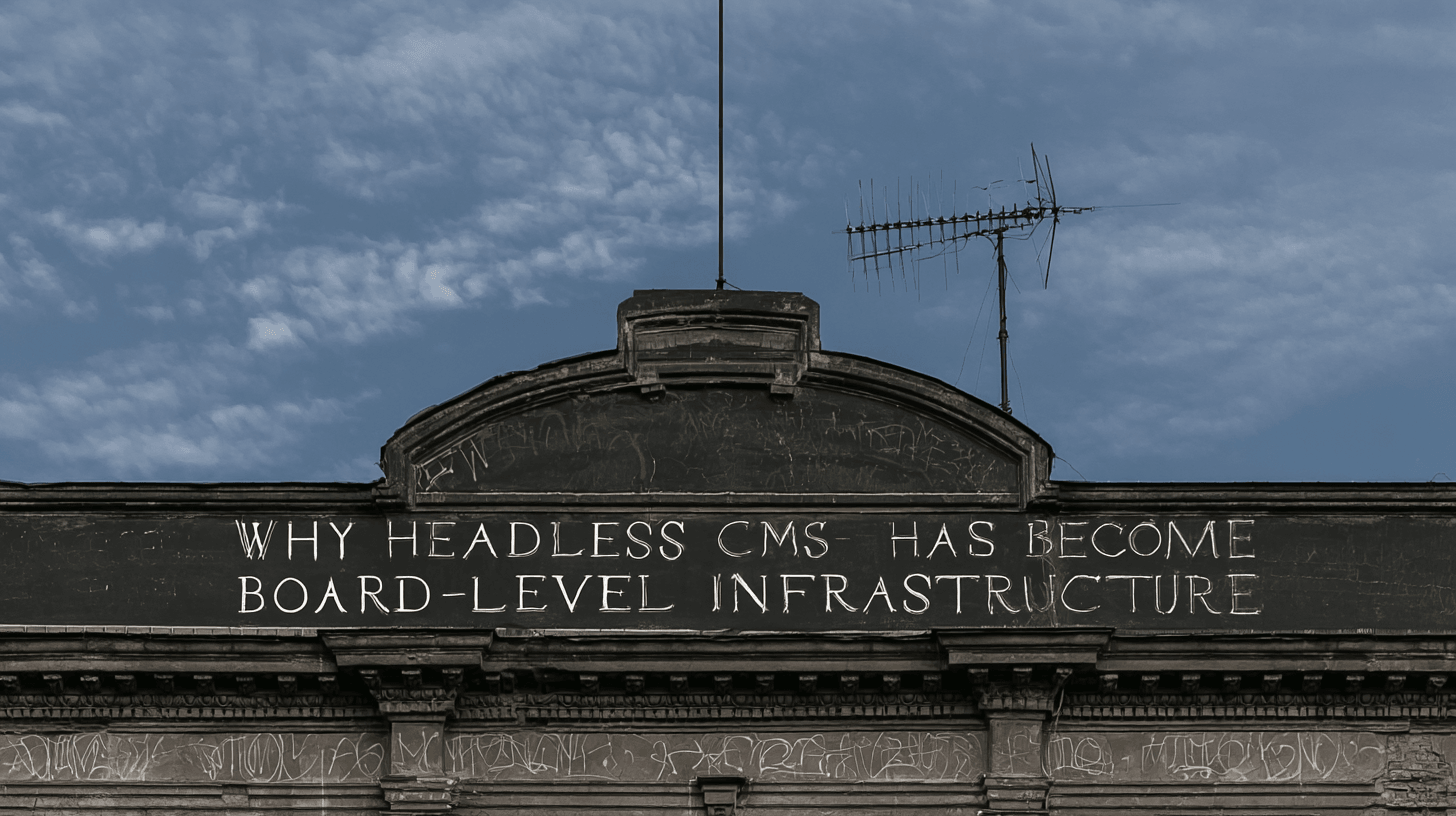
Historic stone building with arched roof and antenna, displaying text reading

Why Headless CMS Has Become #1 Infrastructure

Why headless architecture fits multi-brand delivery, shared content operations, and faster rollout across markets and channels.
SEO Website Migration Checklist in 2026
SEO migration checklist graphic with rising green chart and text about protecting rankings during CMS-to-CMS migration.

SEO Website Migration Checklist in 2026

Use this SEO migration checklist to prevent ranking drops when replatforming your CMS, changing URLs, or moving domains. Covers pre-launch, launch day, and post-migration monitoring.

Planning a consolidation across brands or domains?

  • Lower operational complexity across brands, domains, and teams
  • Stronger brand consistency with room for local variation
  • Faster launches for new markets, brands, and partner sites
Subject
Estimated Budget (EUR)
Timeframe