SaaS companies benefit from headless CMS for flexible, scalable, multichannel content delivery with strong SEO and performance. Key selection criteria: ease of use, integrations, localization, workflows, and website scalability.
Top Platforms:
- Sanity CMS: Real-time collab, customizable; best for large projects (needs tech setup).
- Storyblok CMS: Visual editor for marketers; multichannel focus (weaker SEO).
- Payload CMS: Developer-focused customization; complex workflows.
- Directus CMS: Open-source data management; SQL/large datasets.
- Dato CMS: High performance, SEO; for traffic-heavy sites.
- Hygraph CMS: GraphQL-native federation; best for enterprise-scale, omnichannel (complex setup)
Opt for SaaS-hosted headless CMS for quick setup, low maintenance, and predictable costs — ideal for startups.
Why SaaS Companies Need a Headless CMS
Headless CMS isn’t just trending: it’s exploding in SaaS. Many famous SaaS companies have already implemented headless CMS for scalable content delivery. Here are just some of prominent examples drawn from industry case studies:
-> Memberstack(SaaS membership platform):
Memberstack migrated from Webflow to Sanity + Next.js on Vercel, enabling real-time content updates without redeploys. This cut costs vs. Webflow’s CMS limits, empowered non-technical teams via Sanity Studio, and supported rapid landing page/blog iterations, that is ideal for marketing scalability.
-> Represent (SaaS sales/growth platform):
Represent platform rebuilt their site with Sanity, moving from Webflow’s monolithic setup. Achieved structured content migration from Webflow/Notion, MVP launch with sales features, and flexible post-launch roadmap (e.g., new sections without re-platforming). Result: Streamlined workflows and future-proof scalability.
-> Vercel (JAMstack hosting SaaS): Leverages Hygraph for federated GraphQL content across marketing/docs, powering edge-cached sites with 15% engagement lift.[prior Hygraph notes]
-> Siemens (enterprise SaaS tools): Hygraph unifies CRM/CMS data for global sites, enabling real-time queries and hybrid architectures.
-> Webflow (no-code site builder SaaS): uses Sanity internally for its marketing site, docs, and app content. Scaled omnichannel delivery 5x with real-time collaboration and ISR via Next.js, reducing load times 40% while handling global traffic spikes.
For SaaS businesses, managing content efficiently across various platforms – such as websites, mobile apps, or IoT devices – is essential. A headless CMS allows smooth integration with different systems, scaling content operations as the company grows.
Headless CMS benefits
- Flexibility:
Customization options to support various needs and integrations
- Multichannel Publishing:
Ability to publish content across the web, apps, and IoT
- Scalability:
Capable of handling increased traffic and maintaining high performance
- SEO and Performance:
Tools for optimized SEO and fast loading speeds, enhancing both reach and advanced user experience
Real Metrics / Benchmarks
SaaS companies that migrate to a headless architecture often see:
30–60% faster page loads
20–40% higher Core Web Vitals scores
10–25% conversion improvements on landing pages
50% faster marketing content deployment
These improvements stem from static generation, CDN delivery, and optimized APIs.
Key Criteria for Choosing a Headless CMS for SaaS
When selecting a headless CMS, consider these factors:
-
Ease of Use: Intuitive interface for content and marketing teams.
-
Customization and Flexibility: Ability to customize solutions to unique business requirements.
-
Integration Capabilities: API support for integration with CRM, analytics, and marketing platforms.
-
Localization Support: Built-in tools for handling multilingual content.
-
Performance and Scalability: The ability to handle high traffic without performance issues.
-
Content Workflow: Tools for content management, including approval workflows and publishing.
Best CMS for SaaS websites 2026
Selecting the right headless CMS empowers SaaS companies to deliver content across web, apps, and emerging channels faster: now amplified by AI-driven features like automated content generation, personalized recommendations, and real-time query optimization.
Below, our dev team listed top SaaS CMS platforms: each battle-tested for scalability, integrations, AI tools, and team workflows, tailored to diverse SaaS needs from startups to enterprises.
1. Sanity CMS
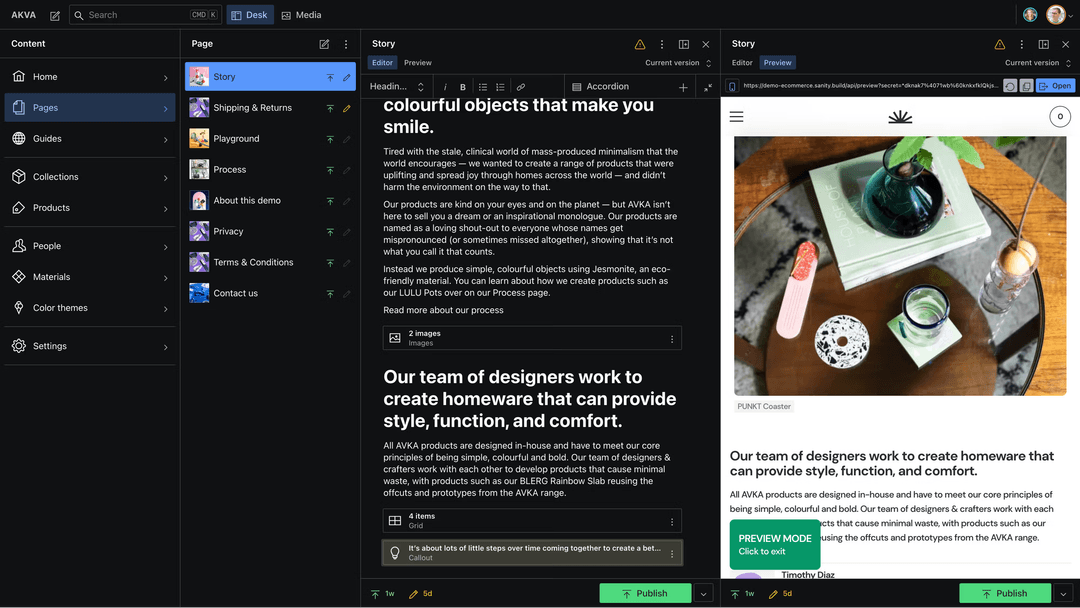 Sanity interface
Sanity is designed with flexibility and real-time collaboration in mind, featuring a customizable data structure and a user-friendly interface for content creators.
Pros: Real-time collaboration tools, powerful customization options.
Cons: Setup requires technical knowledge.
Ideal for: Large SaaS projects where flexibility and customized workflows are essential.
2. Storyblok CMS
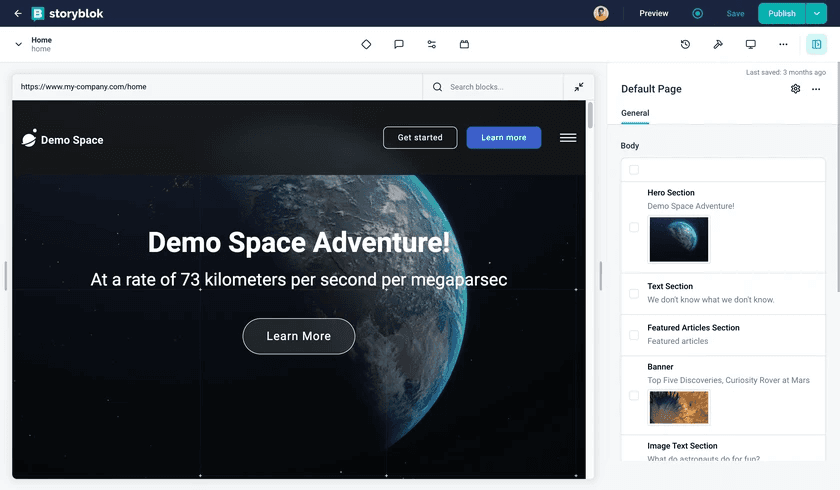 Storyblok interface
Storyblok offers a unique visual editing experience, making it an excellent choice for marketing teams who need intuitive, code-free content management.
Pros: Visual editor for non-developers, strong multichannel support.
Cons: Limited SEO tools compared to other platforms.
Ideal for: Projects focusing on visual content management and multichannel publishing.
3. Dato CMS
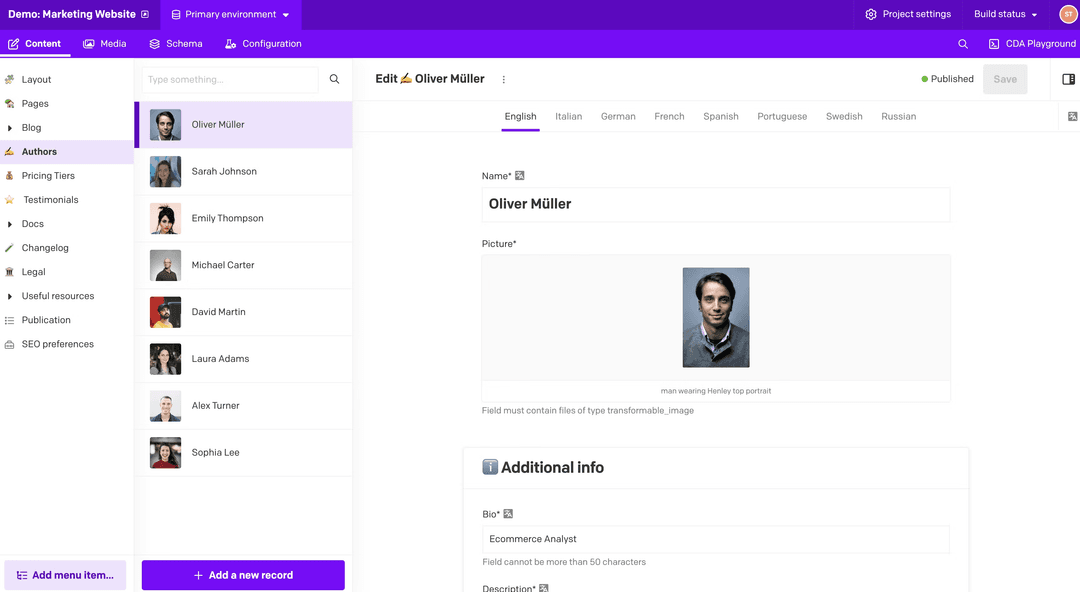 DatoCMS interface
Dato CMS emphasizes performance and speed, making it suitable for high-traffic websites. It provides powerful APIs for developers and a straightforward interface for marketers.
Pros: High performance, ease of use, excellent SEO support.
Cons: Limited visual customization.
Ideal for: High-traffic projects and SEO-focused sites.
4. Payload CMS
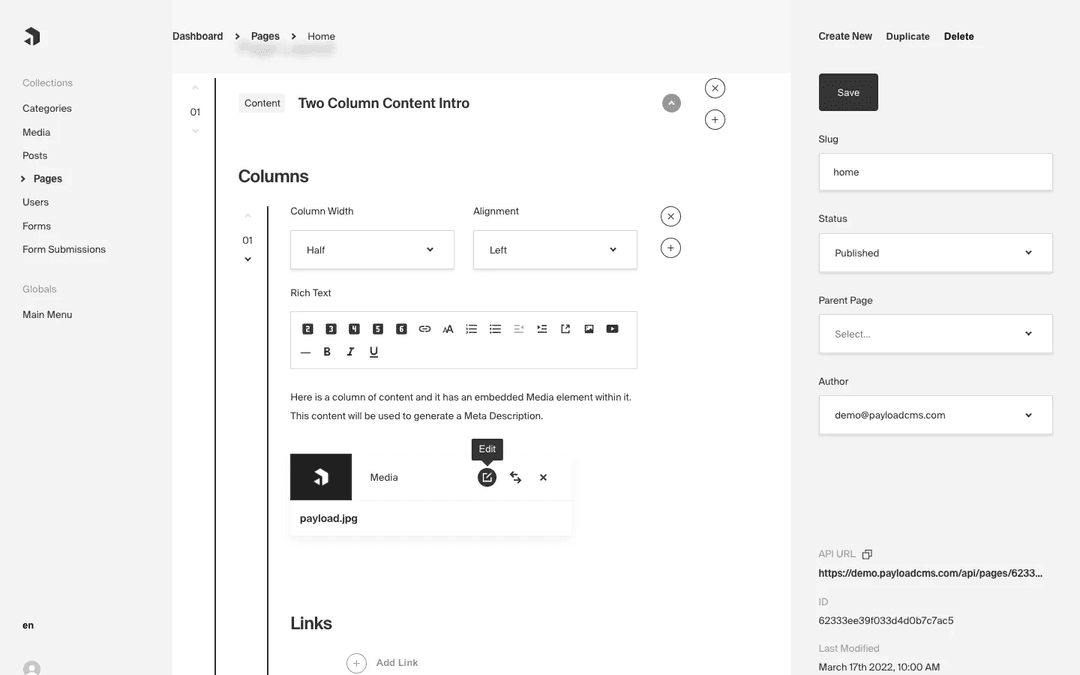 Payload interface
Payload CMS is built for experienced developers, offering extensive customization and support for complex workflows. Its API-driven architecture enables unique user interfaces and system integration.
Pros: Customization options, support for complex workflows.
Cons: Requires development expertise for full setup.
Ideal for: Projects with unique requirements and teams capable of customizing the platform.
5. Directus CMS
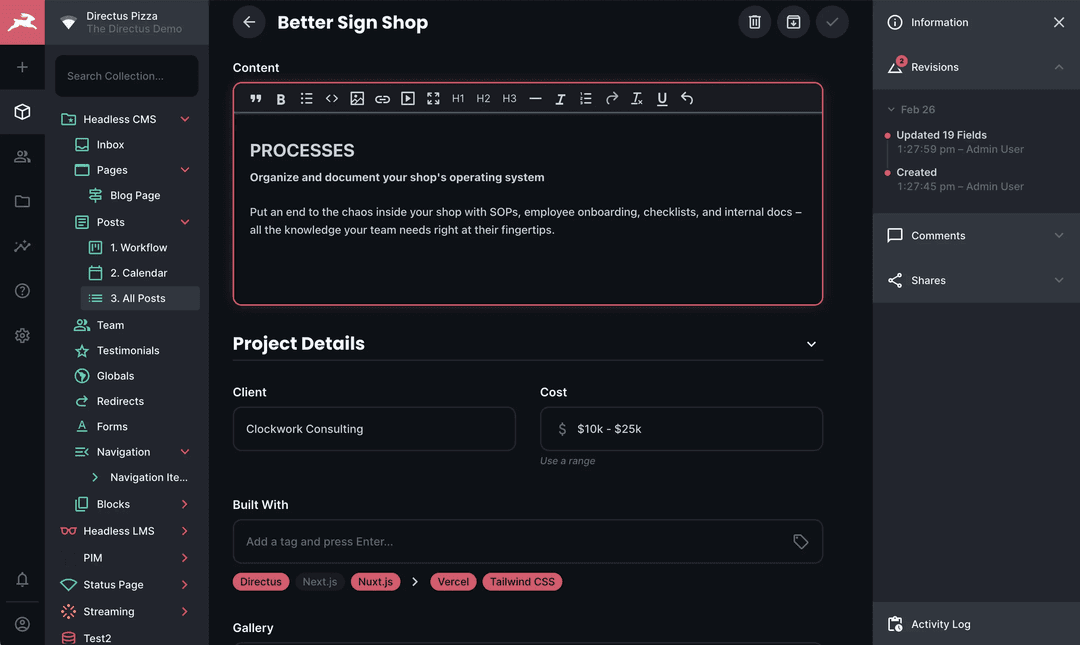 Directus interface
Directus is an open-source platform focused on managing structured data. It integrates with SQL databases, making it a fit for companies handling large datasets.
Pros: SQL database support, extensive data management tools.
Cons: Limited options for non-technical users; some features require configuration.
Ideal for: Data-heavy projects with specific database requirements.
6. Hygraph CMS
Hygraph excels in content federation, uniting data from multiple sources into a single GraphQL layer for seamless SaaS integrations like eCommerce or user-generated content.
Pros: Federated content, robust GraphQL, visual schema builder; 500+ integrations.
Cons: Learning curve for federation setup. Potential drawbacks also include costs scale with usage, API calls, etc. It requires developer expertise for advanced GraphQL queries and customizations, potentially challenging non-technical SaaS marketers.
Ideal for: SaaS with hybrid data (CRM + CMS) needing real-time queries.
When to Choose a SaaS Headless CMS
A SaaS CMS is the best choice if:
- You need fast setup and deployment
- You prefer minimal maintenance
- Your team has limited technical expertise
- Predictable costs are important to you”
These factors make SaaS headless CMS platforms particularly appealing to startups and businesses that want to launch content‑driven experiences quickly, without investing in heavy infrastructure or ongoing support costs.
5-Step SaaS Implementation Roadmap
- Assess needs (team size, channels)
- POC with 2 platforms (e.g., Sanity + Storyblok)
- Integrate stack (Next.js frontend)
- Train teams (link free resources)
- Measure KPIs (page speed, conversion lift)
Typical SaaS Headless CMS Tech Stack
Most SaaS companies combine a headless CMS with modern frontend and infrastructure tools.
| Layer | Tools |
|---|---|
| Frontend | Next.js / React |
| CMS | Sanity / Storyblok / Hygraph |
| Hosting | Vercel / Netlify |
| Search | Algolia |
| Analytics | GA4 / PostHog |
| Personalization | Segment / GrowthBook |
Pricing and ROI Comparison
| Platform | Free Tier | Starter/Growth | Enterprise | Notes |
|---|---|---|---|---|
| Sanity | 20 seats, 200K API req/mo, 2 datasets | $15/seat/mo (up to 50 seats; +$299/mo for extra docs) | Custom (SSO, SLA) | Per-seat + usage; add-ons like SAML $1,399/mo. |
| Storyblok | 1 user, 1 locale, 250K API req/mo | $99/mo (5 seats, multi-lang, visuals) | $299+/mo | Visual editing focus; scales by seats/projects. |
| Dato CMS | 5K records, 100K API calls/mo | $99/mo (25K records, SEO tools) | Custom | Performance/SEO strong; |
| Payload CMS | Free self-hosted (OSS) | $35/mo cloud Standard | $199/mo Pro | Hosting extra (~$20-50/mo); TypeScript dev-friendly. |
| Directus | Free self-hosted (OSS) | $99/mo Professional cloud | Custom | SQL integration; per-project, low lock-in. |
| Hygraph | 3 seats, 500K API req/mo | $199/mo Growth (federated GraphQL) | Custom | Usage-based; best for complex APIs. |
What else?
The right headless CMS for your SaaS company will depend on your specific needs.
- Sanity and Payload CMS are ideal for highly customizable, complex solutions.
- Storyblok is best for visually driven content management.
- Dato CMS offers excellent SEO and performance features.
- Directus suits projects with large datasets.
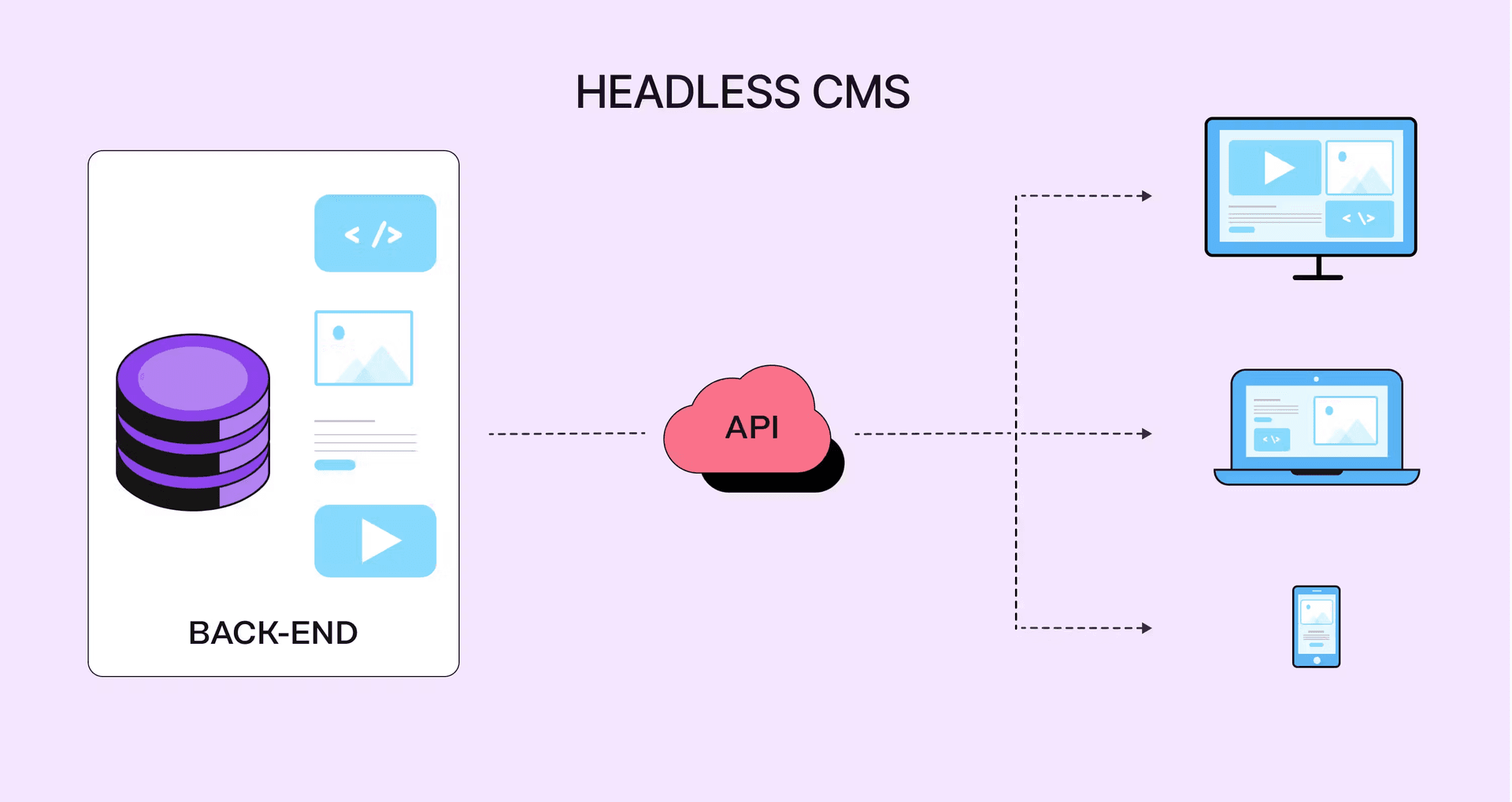
Headless CMS is a powerful content management solution that can be adapted to a range of business needs, not just SaaS. By decoupling the backend content repository from the frontend delivery layer via APIs, it enables seamless omnichannel experiences across websites, mobile apps, IoT devices, and even digital signage.
Well-known CMS platforms listed above reduce vendor lock-in and boost site performance, often achieving Core Web Vitals scores 2-3x better due to optimized JSON payloads. Web development agencies leverage headless CMSes to future-proof client projects, supporting rapid iterations and integrations with frameworks like Next.js or Gatsby.
For a custom consultation or to explore CMS migration options to a headless CMS, get in touch with us.
.jpg&w=1920&q=75)