
Choosing a Medusa headless commerce agency usually comes down to business complexity, integration needs, and how much custom development your commerce stack requires.
This guide combines an agency comparison with a practical buying framework. The agency profiles show which companies have relevant Medusa experience, while the methodology explains what evidence was used to assess that experience.
Why businesses choose Medusa
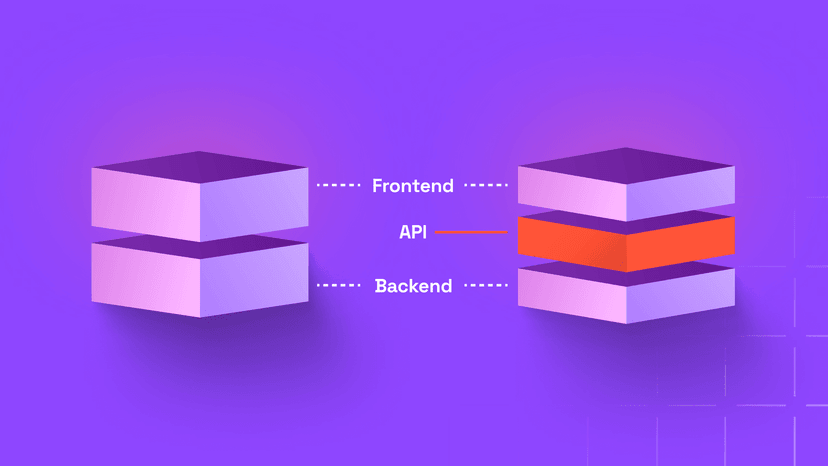
Medusa is a developer-first, modular commerce platform. It gives businesses control over products, carts, orders, pricing, payments, and fulfillment. As a headless platform, Medusa lets teams build custom storefronts and connect the commerce backend to websites, mobile apps, marketplaces, and other channels.
That makes Medusa.js a strong fit when a business needs more flexibility than a standard ecommerce platform can provide. The common reasons are custom checkout logic, B2B pricing, multiple markets, subscriptions, marketplace functionality, or integrations with an ERP, PIM, CRM, or other business systems.
Official Medusa Expert status was considered as one validation signal alongside documented projects and technical scope.
What should business owners look for in a Medusa.js development agency?
Choosing a Medusa.js development agency requires more than checking whether an agency lists Medusa among its technologies. Businesses should evaluate documented Medusa projects, ecommerce expertise, integration capabilities, migration experience, and the technical skills needed to build and support a complete headless commerce architecture.
Named Medusa.js Projects
Named Medusa projects are one of the clearest starting points because they show what an agency has actually implemented. Look for case studies that explain the platform architecture, integrations, migration scope, custom business logic, and project outcomes, rather than simply listing Medusa.js as a technology.
B2B Commerce Experience
B2B experience matters when a Medusa project involves account-specific pricing, quotes, purchasing workflows, payment terms, approval processes, or multiple buyer types. Look for agencies that can demonstrate experience implementing similar commerce requirements.
DTC Commerce Experience
DTC experience is relevant when the project focuses on storefront performance, conversion optimization, subscriptions, merchandising, personalization, and brand experience. Review whether the agency has built customer-facing storefronts with similar requirements.
Ecommerce Integrations
Integration capability becomes important when Medusa is part of a broader technology ecosystem. Look for experience integrating ERP, PIM, CRM, payment, fulfillment, analytics, search, and POS systems.
Ecommerce Migration Experience
Migration experience is particularly valuable when moving from Shopify, Magento, WooCommerce, Craft Commerce, Sharetribe, or another ecommerce platform. A successful migration involves more than transferring product data. It can also require SEO preservation, redirect mapping, historical order migration, customer data handling, and workflow redesign.
Headless Storefront Development
Headless storefront expertise matters because Medusa provides the commerce backend rather than the complete customer-facing experience. Agencies may need to combine Medusa with technologies such as Next.js, React, search services, analytics platforms, and modern deployment infrastructure.
CMS and Content Architecture
CMS expertise can be important when ecommerce and content need to work together. Marketing pages, landing pages, localization, editorial content, and merchandising experiences may require a headless CMS alongside Medusa.
API and Systems Architecture
API expertise is another useful indicator because headless commerce depends on multiple systems communicating through APIs rather than operating as a single application. Evaluate how an agency approaches API design, integrations, authentication, data synchronization, error handling, and long-term maintainability.
Post-Launch Support
Post-launch support should not be overlooked. Businesses should understand how an agency handles monitoring, maintenance, Medusa upgrades, security updates, performance optimization, bug fixes, and future feature development after launch.
Team Composition
Finally, evaluate who will actually work on the project. The relevant team may include solution architects, backend developers, frontend developers, designers, and QA specialists. Understanding the team’s actual experience can provide a clearer picture of delivery capabilities than an agency’s technology list alone.
Top Medusa Agencies to Consider in 2026
| Agency | Region | Best for | Project complexity | B2B / DTC / Marketplace | Migration strength | CMS + frontend strength | Enterprise fit |
|---|---|---|---|---|---|---|---|
| FocusReactive | Europe, North America | Next.js storefronts, headless CMS, performance engineering | High | DTC & B2B | Strong — WooCommerce specialist | Very strong — Next.js, Payload CMS | Mid-to-enterprise |
| Rigby | UK / US | Complex business models, multi-store commerce, legacy migrations | Very high | B2B, DTC & Marketplace | Very strong — Sharetribe replatforming | Moderate — backend-heavy focus | High |
| Agilo | Europe | Omnichannel retail, POS integration, custom platforms | High | B2B & Marketplace | Moderate — Adyen integrations | Strong — Next.js, custom React Native | Mid-to-enterprise |
| Thoughtworks | Global | Large enterprises, high-volume B2B, massive scale | Enterprise scale — $250k+ budgets | B2B & DTC | Strong — enterprise transformation | Strong — API-first composable architecture | Very high |
| Cloudflight | Global | Enterprise B2B, cloud engineering, international commerce | High — 20+ markets | B2B | Strong — systems replatforming | Strong — integrated content management | Very high |
| 306 Technologies | Australia / New Zealand | Complex catalogs, regulated products, B2B/DTC hybrids | High — thousands of variants or fitments | B2B & DTC | Strong — Craft Commerce replatforming | Strong — Next.js, Sanity CMS | Mid-to-enterprise |
| Tinloof | UK / US | Design-led ecommerce, content-rich DTC, configurators | Moderate to high | B2B & DTC | Not specified | Very strong — Sanity, design systems | Mid-market |
| Seeed | USA | Square integrations, multi-vendor marketplaces | High | Marketplace | Strong — complete SEO and data replatforming | Strong — Next.js, Payload CMS | Mid-market |
| Lambda Curry | Not specified | Auctions, subscriptions, multi-tenant architecture | High — 2M+ users | B2B, DTC & Marketplace | Not specified | Moderate | High |
| Netguru | Not specified | Broader software and product engineering, mobile apps | High | Marketplace | Not specified | Strong — mobile apps, custom frontends | High |
1. FocusReactive
 Focus Reactive Headless Commerce Agency
FocusReactive is a Medusa development agency with experience combining Medusa, Next.js, and headless CMS platforms for content-driven ecommerce implementations. Its documented Medusa project combines Medusa for commerce, Payload CMS for content management, and Next.js for the storefront.
The implementation included core commerce functionality such as catalog management, cart, checkout, CMS integration, performance optimization, quality assurance, and launch support. The project also emphasized frontend performance and Core Web Vitals, which may be particularly relevant for businesses where site speed and content operations are important considerations.
FocusReactive’s broader experience spans composable commerce, frontend engineering, and headless CMS implementations, making it a potential fit for organizations that need commerce, content, and frontend development delivered within the same project.
Limitations: Organizations seeking a narrowly scoped backend-only implementation partner may prefer an agency with a stronger focus on commerce architecture and integrations alone.
Best fit: Businesses looking to combine Medusa with Next.js, headless CMS capabilities, and performance-focused frontend development.
2. Rigby
 Rigby Ecommerce Partner
Rigby is one of the most Medusa-focused agencies in the current ecosystem, with documented experience across B2B, DTC, marketplaces, subscriptions, migration, and multi-store commerce. Medusa’s own Expert directory lists Rigby across multiple regions and highlights cases spanning marketplace, DTC, B2B, subscription, POS, ERP, PIM, dynamic pricing, and configurable products.
Its public profile describes a team focused heavily on backend architecture and complex business logic. Medusa also highlights Rigby’s work on Patyna, Natuja, legacy migrations, and its contribution to the Medusa ecosystem.
Rigby’s work is relevant for companies that need more than a standard storefront because its service portfolio explicitly covers marketplaces, B2B, subscriptions, auctions, mobile commerce, and custom Medusa development.
Limitations: The agency’s backend-heavy profile may require additional design or frontend support if you need a highly polished brand experience or broad content operations around the commerce stack.
Best fit: complex commerce models, marketplaces, multi-store systems, B2B, and businesses moving an existing commerce platform to Medusa.
3. Agilo
 Agilo headless ecommerce
Agilo is a Medusa-first ecommerce agency with documented expertise in custom commerce platforms, marketplaces, B2B, omnichannel commerce, and integrations. Medusa identifies Agilo as its first official Medusa Expert partner and lists cases covering POS, marketplace, B2B, ERP, dynamic pricing, and configurable products.
Its Tekla project demonstrates how Medusa can become the foundation for an omnichannel commerce system rather than simply a web store. The implementation includes a Medusa-powered webshop, ERP integration, an Adyen migration, a Next.js frontend, and a custom React Native POS system with real-time inventory synchronization.
Its Viessmann case shows another business model where standard ecommerce assumptions are insufficient. The project is described as a B2B rental marketplace with real-time pricing, provider management, and automation.
Limitations: Agilo’s strength is in complex commerce and systems integration, so smaller or largely template-driven projects may not need the level of architecture and implementation depth it is built around.
Best fit: retail and omnichannel businesses, B2B commerce, marketplaces, POS integration, and highly customized Medusa implementations.
4. Thoughtworks
 Thoughtworks Consultancy
Thoughtworks is the enterprise-scale option in this shortlist, with Medusa projects involving major B2B and omnichannel commerce environments. Medusa’s Expert profile lists a usual project budget of $250,000+, global delivery regions, and experience covering B2B, DTC, subscriptions, ERP, PIM, mobile apps, dynamic pricing, and configurable products.
Its Redington implementation demonstrates the scale at which the agency is using Medusa. Medusa describes the project as infrastructure supporting $4 billion in digital sales for a major B2B IT distributor, delivered in six months.
Its Makro Pro project demonstrates a different form of enterprise complexity by focusing on omnichannel order orchestration across thousands of daily orders and more than 100 stores.
Thoughtworks is therefore relevant when Medusa needs to be evaluated as part of a larger enterprise transformation rather than as a standalone storefront project. Its profile describes global delivery capabilities spanning strategy, design, engineering, and composable API-first architectures.
Limitations: The scale and delivery model are a better match for large programs than for small commerce teams with limited budgets or simple storefront requirements.
Best fit: large enterprises, high-volume B2B, omnichannel commerce, complex integrations, and transformation programs requiring substantial engineering resources.
5. Cloudflight
 Cloudflight Web Agency
Cloudflight is a strong choice for businesses that need enterprise-grade Medusa implementation combined with cloud engineering and systems integration. Medusa lists Cloudflight as an Expert partner serving multiple global markets, with B2B, ERP, PIM, dynamic pricing, mobile, and configurable-product experience.
Its Containex project illustrates a business case centered on B2B commerce rather than conventional retail. The implementation operates across more than 20 markets with real-time product synchronization and dynamic pricing.
Cloudflight also explicitly offers Medusa.js implementation, integration planning, migration, architecture, infrastructure, and long-term support. Its service materials cover ERP, PIM, payment systems, and other business-system integrations.
CMS architecture is another relevant capability because Cloudflight has published work on combining Medusa with integrated content management. That makes it worth considering for brands whose commerce experience depends heavily on editorial content and richer product storytelling.
Limitations: Cloudflight is strongest where commerce sits inside a larger enterprise systems program, so teams looking for a lightweight storefront-only partner may be better served by a more specialized agency.
Best fit: enterprise B2B, international ecommerce, integration-heavy commerce, and organizations that need commerce, cloud, and content engineering under one delivery partner.
6. 306 Technologies
 306 Headless Ecommerce Agency
306 Technologies stands out for technically complex DTC and B2B commerce where product data, compatibility logic, ERP/PIM integrations, and custom workflows are central to the project.
Its Wipertech project is a particularly detailed Medusa migration example because it moved an automotive retailer from Craft Commerce to Medusa across Australia and New Zealand. The implementation includes more than 3,000 vehicle applications, 6,000+ vehicle-specific variants and kits, thousands of fitment relationships, and more than 2,500 development hours.
The architecture combines Medusa with Next.js and Sanity CMS, making the project relevant to companies that need commerce and content infrastructure rather than an isolated ecommerce backend. 306 Technologies also documents unified B2B and DTC commerce for Lake Country Co-op Outdoors, including tiered pricing, ERP/PIM integration, and custom checkout.
Limitations: Its strongest examples are data-heavy and technically involved, so brands with simpler catalogs or limited integration needs may find the agency’s delivery model more than they require.
Best fit: complex catalogs, automotive and regulated products, B2B/DTC hybrids, ERP/PIM integrations, and businesses migrating from legacy ecommerce systems.
7. Tinloof
 Tinloof design agency
Tinloof) is particularly relevant for brands where design, frontend experience, and Medusa commerce need to be developed together. Medusa lists Tinloof as an Expert partner with DTC, B2B, dynamic pricing, and configurable-product experience across multiple regions.
Its Munchies project demonstrates a reusable Medusa DTC storefront rather than a one-off online shop. Tinloof describes the project as a feature-rich starter integrating Medusa, Sanity, Resend, a design system, rich product pages, recommendations, and theme customization.
Its Brand Your project demonstrates the opposite end of the spectrum, with a B2B self-service storefront for made-to-order packaging and hundreds of configurable product options across the UK and US.
Tinloof therefore offers useful evidence for businesses that see ecommerce as part of a broader digital brand experience. Its Medusa profile covers branding, web design, development, and commerce as connected disciplines.
Limitations: Tinloof’s design-led approach is a strong fit when frontend experience matters, but teams wanting a highly backend-centric implementation partner may need to pair it with deeper systems support.
Best fit: consumer brands, content-rich DTC experiences, design-led ecommerce, and B2B product configurators.
8. Seeed
 Seeed headless commerce agency
Seeed is a strong match for businesses where Medusa needs to connect deeply with Square, operational systems, marketplaces, or custom automation. Its offering combines Medusa, Payload CMS, Next.js, Square integrations, headless commerce, and custom commerce applications.
Marketplace capability is one of Seeed’s clearest differentiators because it documents multi-vendor architectures with Medusa, a vendor-management layer, Next.js, and Square payment splitting. Its migration offering also shows a complete replatforming process rather than a simple data export. The documented approach includes discovery, data migration, storefront development, app replacement, SEO preservation, DNS cutover, and post-launch stabilization.
Seeed also publishes Medusa integrations and reusable technical components, including a Medusa-Square integration and custom modules.
Limitations: The agency’s strongest use cases are tightly tied to Square and marketplace-style requirements, so businesses with conventional single-store commerce may not need that level of specialization.
Best fit: Square-based businesses, marketplaces, mid-market operators, migration projects, and commerce systems requiring custom operational integrations.
9. Lambda Curry
 Lambda Curry Software Studio
Lambda Curry is a boutique ecommerce engineering agency focused on sophisticated Medusa implementations such as marketplaces, auctions, subscriptions, dynamic pricing, and multi-tenant commerce. Medusa lists it as an Expert partner with B2B, DTC, marketplace, ERP, PIM, services, and dynamic-pricing experience.
Its Ashley x Descend case demonstrates an auction model with real-time price reductions, AI-driven product categorization, and warehouse inventory movement. The agency says the Medusa implementation supported an ecommerce MVP that launched in three months. Lambda Curry also develops Medusa-specific plugins and starter technology, including extensions for webhooks and product reviews.
Limitations: As a boutique specialist, it is likely best for focused builds with custom engineering requirements rather than broad multi-workstream programs that need a larger delivery bench.
Best fit: marketplaces, subscription products, auctions, multi-tenant commerce, and businesses requiring substantial custom Medusa engineering.
10. Netguru
 Netguru Development Company
Netguru is worth considering for businesses that want Medusa expertise within a broader software engineering and digital product capability. Its Medusa service positions the platform for custom storefronts, mobile applications, marketplaces, and multi-tenant commerce.
Its positioning is broader than that of a Medusa-only specialist because Medusa sits within a larger technology and product-development offering. That can matter when commerce is one component of a broader digital product or platform transformation.
Netguru also publishes educational material explaining Medusa’s modular architecture and where it fits within composable commerce. Its Medusa coverage addresses architecture, technical capabilities, integrations, scalability, and business use cases.
Limitations: Because Medusa sits inside a broader service mix, businesses seeking a niche Medusa-only implementer may want to confirm the depth of platform-specific experience and the exact team assigned.
Best fit: companies looking for Medusa alongside broader product engineering, mobile, software development, and digital transformation capabilities.
When should a business hire a Medusa.js development agency?
A business should consider hiring a Medusa.js development agency when out-of-the-box ecommerce functionality no longer reflects how it sells, operates, or plans to scale. Common scenarios include:
- Complex B2B commerce requirements. Businesses may need account-specific pricing, customer groups, quote workflows, payment terms, product restrictions, approval processes, or custom ordering flows that go beyond a standard theme-based store.
- Marketplace development. Multi-vendor marketplaces often require custom logic for seller onboarding, commission structures, vendor-managed inventory, order splitting, payouts, and multi-party checkout.
- Migration from another ecommerce platform. Moving from Shopify, Magento, WooCommerce, Craft Commerce, Sharetribe, or another platform involves more than product-data transfer. A migration may need to preserve customers, order history, URLs and redirects, integrations, SEO equity, operational workflows, and custom business rules.
- Content-heavy ecommerce experiences. Businesses that rely on editorial content, campaign landing pages, product storytelling, localization, and structured content can benefit from combining Medusa with a headless CMS. Medusa manages transactional commerce functionality, while the CMS supports flexible marketing and content experiences.
Is Medusa the right choice for every ecommerce business?
Not necessarily. Medusa is best suited to businesses that require a higher degree of customization than traditional ecommerce platforms typically provide. Common examples include B2B commerce, marketplaces, subscription models, custom pricing structures, and integration-heavy environments.
Businesses with straightforward catalog, checkout, and content requirements may find that a conventional ecommerce platform meets their needs with less implementation effort. In contrast, organizations with complex operational requirements may benefit from the greater flexibility offered by a modular, API-driven commerce architecture.
The key question is not whether Medusa is more powerful than another platform, but whether the additional flexibility justifies the increased implementation and maintenance responsibility.
How much do Medusa.js development services cost?
Medusa.js development costs vary primarily with business complexity, integrations, migration scope, custom functionality, and the amount of frontend and infrastructure work required. There is no meaningful single “Medusa project price” because a basic DTC storefront and a multi-market B2B commerce platform are fundamentally different engineering projects.
Public data shows that Medusa projects can range from small business setups to large enterprise implementations costing over $250,000. Different agencies may offer different pricing based on the scope of work. Check whether the price covers design, frontend development, CMS setup, data migration, integrations, SEO, hosting, testing, analytics, launch support, and ongoing maintenance.
The best proposals usually break the project into milestones and business goals, rather than only estimating development hours. This makes it easier to compare agencies and understand exactly what you are paying for.
How long does a Medusa ecommerce project take?
A Medusa project can take anywhere from several weeks for a focused implementation to many months for a complex enterprise commerce platform. Scope matters more than the technology label.
A relatively contained DTC project may concentrate on catalog, checkout, payments, storefront, content, and launch. A B2B or marketplace project can add account hierarchies, pricing rules, vendors, ERP/PIM integrations, inventory logic, custom workflows, and multiple channels.
For instance, a Shopify migration deserves its own discovery process because Shopify apps, customer data, orders, redirects, subscriptions, metafields, and third-party integrations all need to be evaluated before the cutover. FocusReactive documents this scenario in its guide to migrating from Shopify to Medusa.js.
The right way to compare timelines is therefore to ask what will actually be delivered by launch. A shorter proposal that excludes migration validation, SEO, integrations, testing, or stabilization may not represent a faster project in practical terms.
Can Medusa ecommerce connect to AI shopping experiences?
Medusa can serve as the commerce backend behind AI-assisted shopping experiences when products, pricing, availability, cart actions, and checkout need to be connected to an AI interface. The key architectural question is how the AI layer accesses commerce data and which actions it is allowed to perform.
A business considering this approach should evaluate whether its commerce agency understands both Medusa and AI application architecture. Product retrieval, catalog search, recommendations, cart actions, authentication, inventory checks, and order creation all need clearly defined interfaces and permissions.
FocusReactive has also documented a custom MedusaJS ChatGPT shopping app that explores how a Medusa commerce backend can connect to a ChatGPT shopping experience. This is particularly relevant for businesses investigating AI-assisted product discovery rather than treating AI as a separate marketing layer.
How to choose the right Medusa agency for your business
✅ The right choice starts with your commerce model, not the agency’s technology logo wall. Define whether you are building DTC, B2B, marketplace, subscription, multi-store, omnichannel, or a hybrid model before comparing implementation partners.
✅ The right agency should be able to explain your architecture in business terms. A strong discovery process should connect commercial requirements to product data, pricing, fulfillment, customer accounts, integrations, content, storefront behavior, and operational workflows.
✅ The right agency should also fit your organization’s operating model. An enterprise transformation may benefit from a large engineering organization, while a focused DTC business may prefer a smaller team with deep Medusa and frontend specialization.
Final shortlist: Medusa commerce agencies to investigate
Businesses comparing frontend architecture should also consider the broader ecosystem around the commerce backend. Our guide to the best Next.js headless ecommerce platforms compares Medusa with other headless commerce options and explains where Medusa fits in a modern Next.js stack.
Each agency has different strengths and is best suited for specific types of commerce projects.
- FocusReactive combines Medusa with Next.js and headless CMS engineering.
- Rigby specializes in Medusa implementations and complex commerce builds.
- Agilo combines Medusa expertise with B2B commerce, marketplaces, and omnichannel retail.
- Thoughtworks is geared toward enterprise-scale commerce transformation.
- Cloudflight combines Medusa development with enterprise integrations and cloud engineering.
- 306 Technologies focuses on complex B2B and DTC commerce, particularly data-intensive implementations.
- Tinloof pairs design-led ecommerce with Medusa development.
- Seeed emphasizes Square integrations, marketplaces, platform migrations, and open-source commerce.
- Lambda Curry specializes in highly customized commerce models.
- Netguru offers Medusa expertise within a broader software-engineering and product-development practice.
The right agency should bring more than Medusa.js expertise. They should have proven experience solving the commerce, content, integration, and scaling challenges your business will face.
Looking for a trusted Medusa.js partner? Before selecting an agency, review relevant case studies, team composition, migration experience, and long-term support capabilities.