
TL;DR
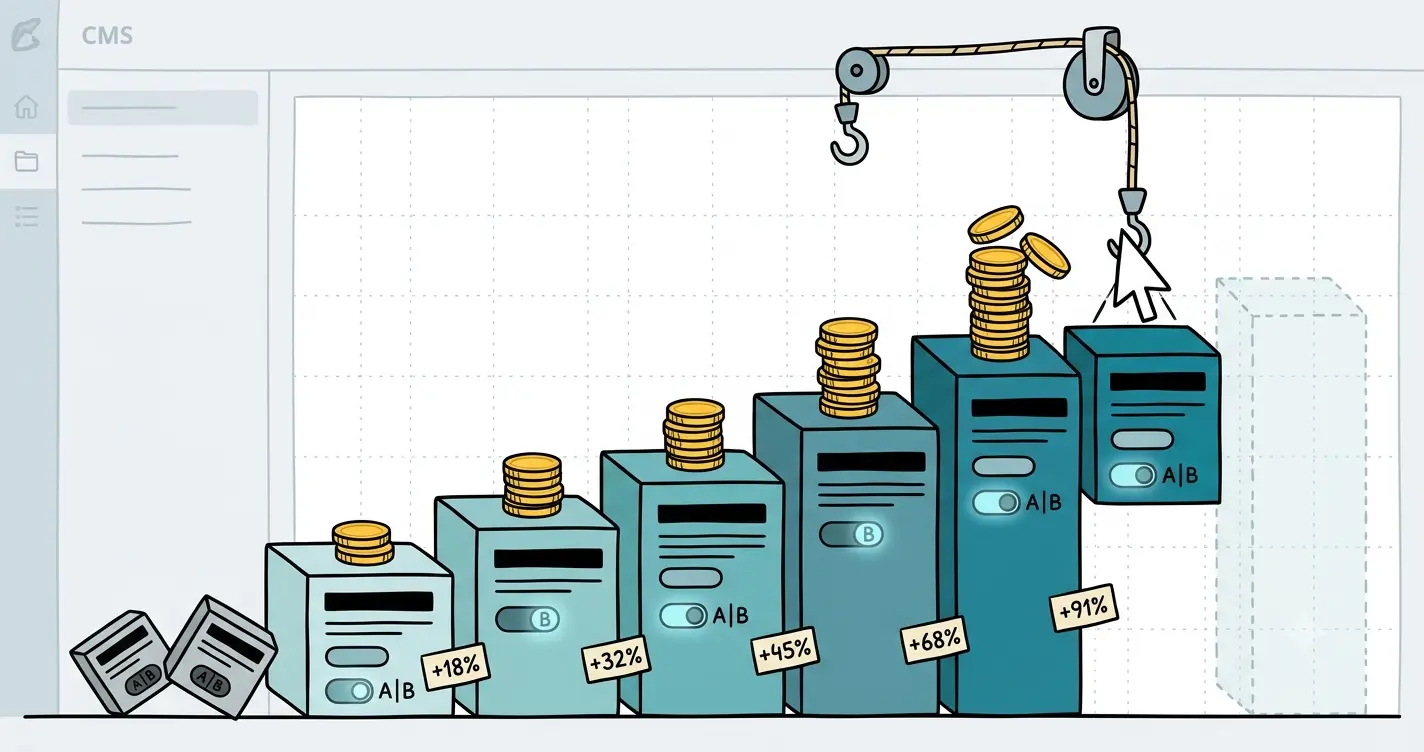
The best way to improve conversions with content is to combine A/B tests with analytics insights right inside the CMS. This way you can create copy, run an experiment, use the data to improve copy. Repeat until you find the key to your target customer. You can iterate over texts, imagery, CTA to find the right combo. This simple loop can improve business metrics significantly.
Why content teams can’t run A/B tests
Writing copy is almost every time based on experience, understanding the target customer, skills of a person who writes it. This process is rarely based on real metrics and measured outcomes, and this is the problem. Let me share four problems i experienced myself during my career working with content teams:
No data-driven content strategy
Someone writes the headline, someone else prefers another, and the version that ships is usually the one backed by the most senior person in the room. There’s even a name for it - the HiPPO, the Highest Paid Person’s Opinion. Their instinct isn’t necessarily wrong, but there is no actual way of measuring it. is not always the case. The decision should be based on real data and measured.
No content experimentation in the CMS
The most important thing is to have A/B tests right next to you content with actual stats for target action. Most content platforms were never built to run experiments. There’s no native way to hold two versions of a page, manage traffic split between them, and compare results. Adding third party tool could slow your pages down and add development costs.
Three tools for one job: CMS, A/B testing software, analytics
The copy lives in the CMS, the experiment runs in a separate A/B tool, and the results land in analytics. Three different platforms for a single problem we’re solving - “improve copy and conversion”. It’s really hard to do your best work, when you need to jump from one program to another. Having all the data in a single place really unlocks team’s capabilities of experimenting with things, that other teams can’t do due to technical complexity.
Every A/B test needs a developer
The point of marketing owning the page is speed: write, publish, learn, improve. But when every test needs a developer, an analytics export, and a meeting to reconcile the numbers, the loop breaks. Marketing loses control of the one thing it should own - finding the right approach that sell.
What A/B testing is worth
This isn’t a niche concern. The data shows a wide gap between what testing delivers and how many teams actually do it.
Let’s start with the upside. According to Searchlab’s 2026 CRO benchmarks, the average conversion uplift from a successful A/B test is 12-15%. And it compounds: the same report finds that top CRO teams run 15-30 tests per month and gain 20-40% in cumulative conversion improvement per year, while companies running fewer than five tests a month see just 5-8%.
Now the gap. According to ElectroIQ’s CRO statistics, nearly 71% of companies run fewer than five A/B tests a month, which slows their learning to a crawl. Yet the payoff is clear: a survey of 3,000 companies by Outgrow found an average ROI of 223% from CRO, with 5% of them reporting a return above 1,000%.
The takeaway is simple. Testing works, and it compounds. Most companies just don’t do enough of it. Usually because the tooling makes it hard and too technical to work with.
But we have a solution to this problem.
Open-source A/B testing and analytics inside the CMS
Ideal CMS is an open-source project built on Payload CMS. This is the CMS with two integrated modules: A/B testing plugin and an analytics plugin. Everything combined we get the CMS platform with ability to natively run A/B tests and analyse results. This allows marketing team to work on content and run experiments independently.
There are three main steps to run content experiments:
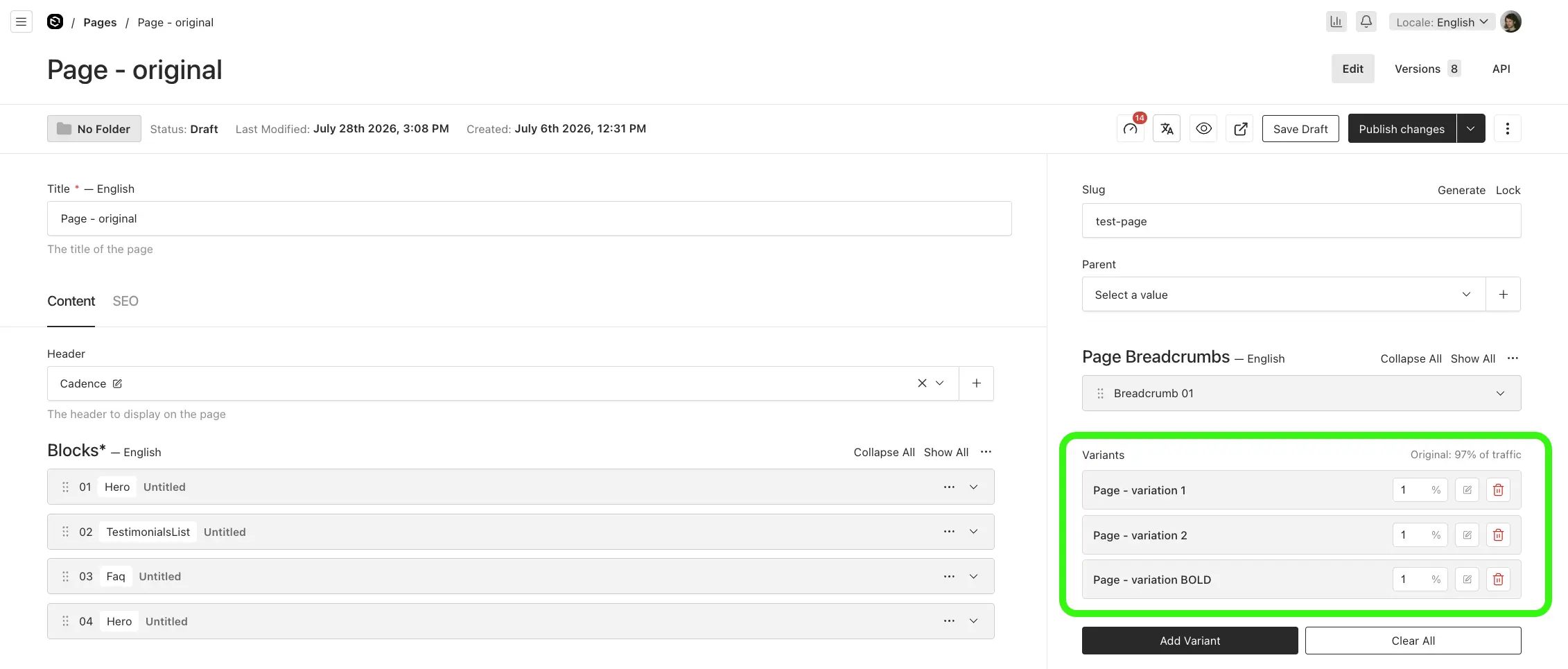
Create headline and CTA variants
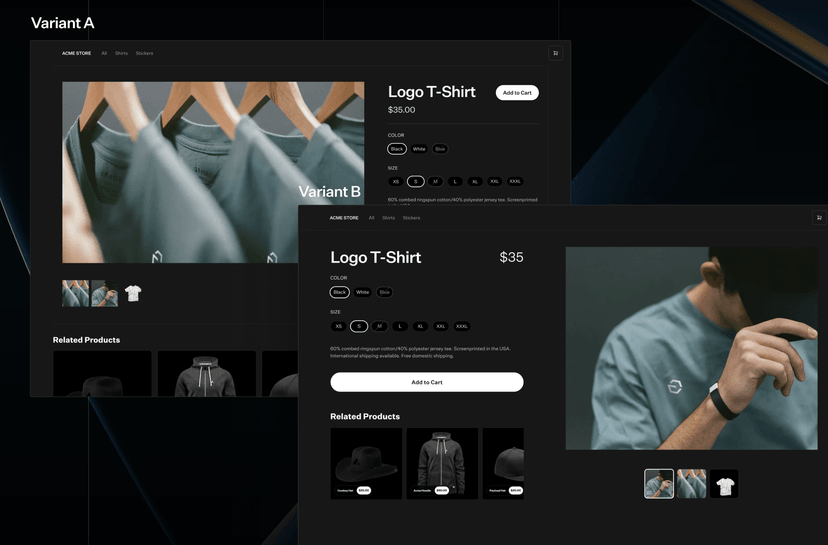
Write a second version of a headline, a call-to-action, or change background assets. Experiment to find the best combination. Don’t run experiment for too many variations, move in a baby steps. Do it in the CMS editor.
 ab test variations demo
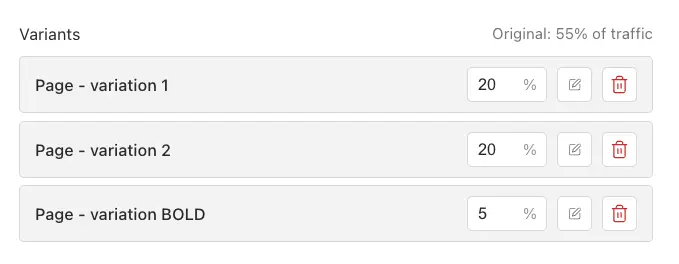
Split traffic between variants
Decide what percentage of visitors sees each version, and let the CMS route them. Such granular control of the traffic will allow your team to do more bold experiments, limiting variations with significant changes to small subset of visitors
 a/b test traffic split demo
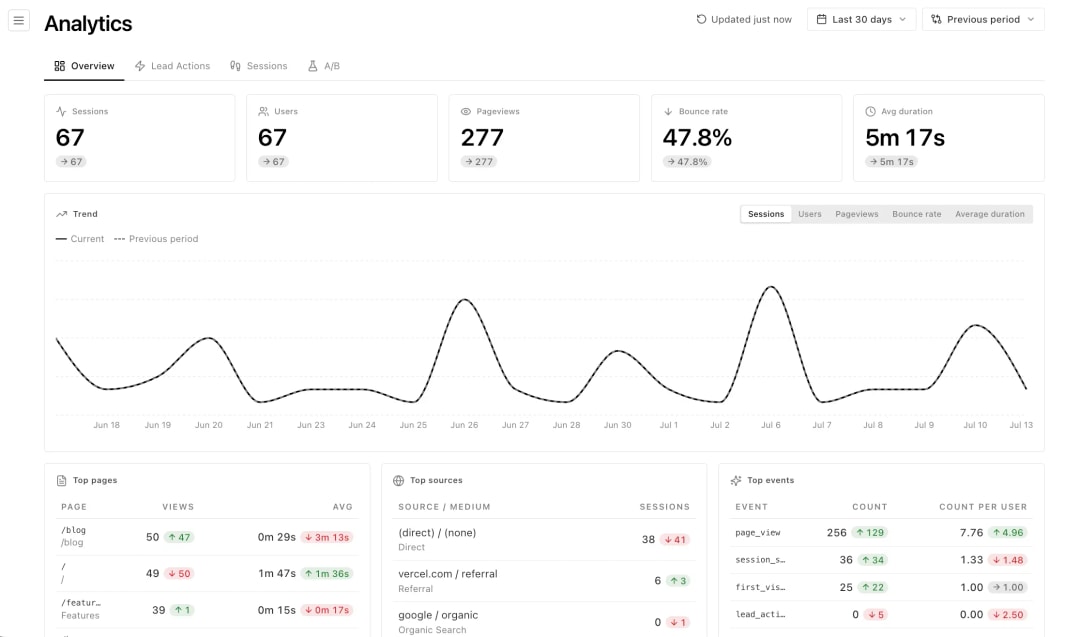
Read results in built-in CMS analytics
Analytics plugin allows you to see what pages get more traffic and popular among visitors. You can get insight about each session and see what journey converted.
 analytics metrics demo
The analytics plugin has an A/B tab that shows all active experiments and some quick stats about them. Then for each experiment we show visitors’ exposure and conversion rate, based on target action.
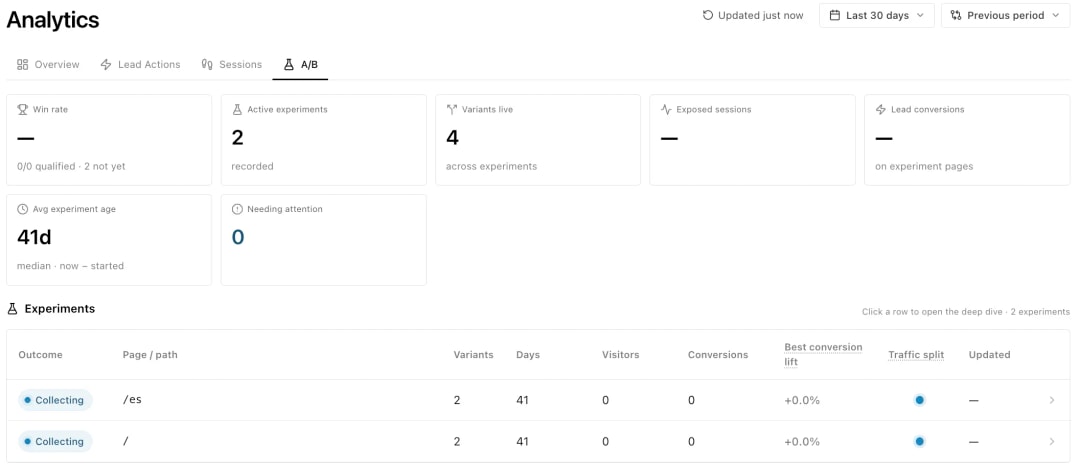 ab experiments demo
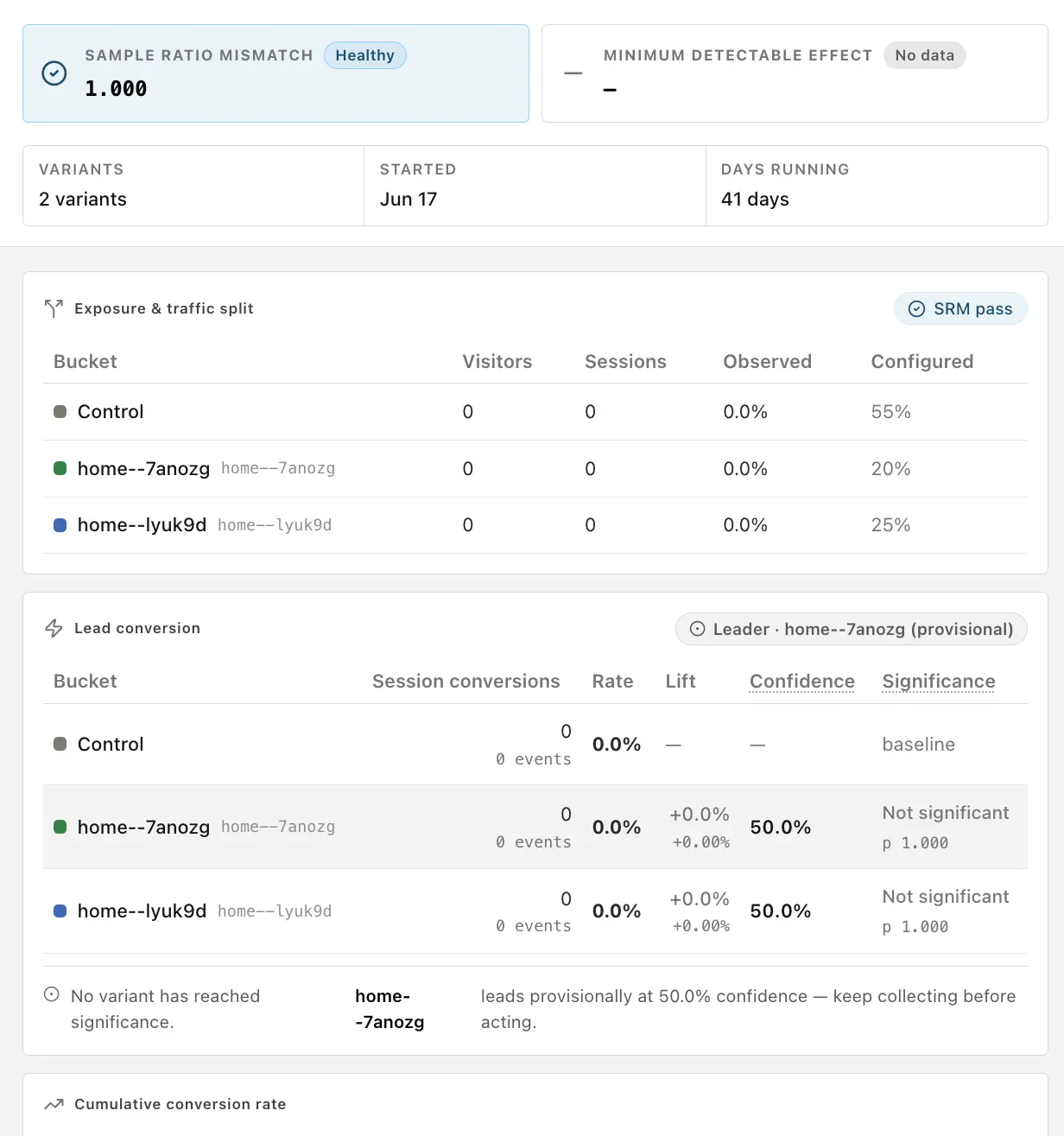 ab analytics demo
According to Harvard Business Review, workers toggle between applications around 1,200 times a day, and research from Qatalog and Cornell’s Ellis Idea Lab found it takes an average of 9.5 minutes to refocus after each switch. Every tool you remove from the loop is friction you remove. With less friction your team will actually keep doing it.
At the end, with this setup, marketing will own the full cycle. Write, publish, measure, improve - without leaving the CMS or asking for a technical help.
A/B testing example: improving a landing page CTA
Here’s the whole loop in practice. Say you want to improve a landing page where the call-to-action CTR isn’t great.
1. Write a second version. In the editor, duplicate the block you want to test and rewrite it - a new CTA, a sharper headline, a different opening line. This is normal content editing, not a separate tool.
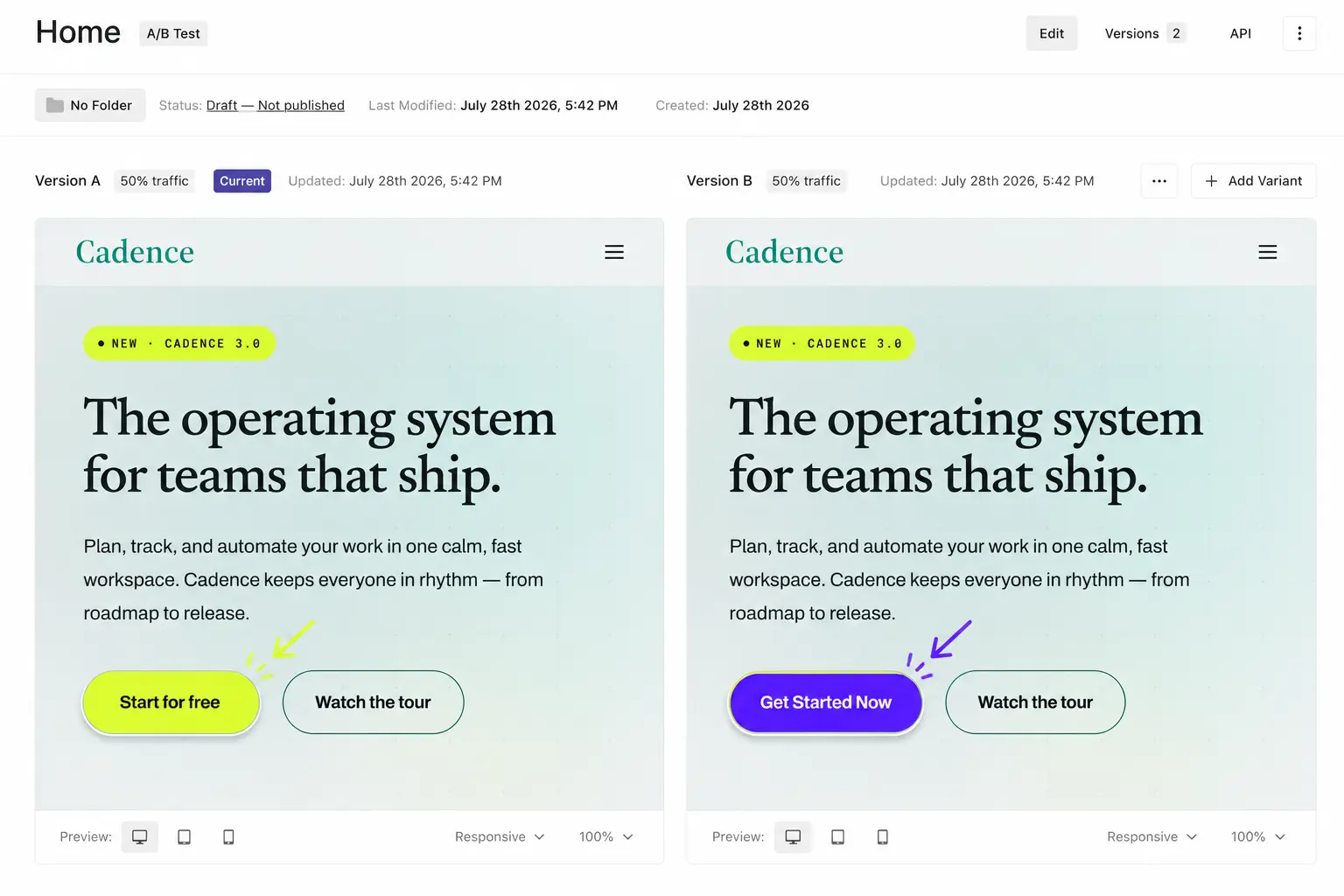 ab variations illustration
2. Split the traffic. Set what share of visitors sees each version - a simple percentage per variant. From here, the CMS handles routing visitors and remembering who saw what.
a/b test traffic split demo
3. Let it run, then read the result. After the experiment has gathered enough data, open the A/B tab in analytics. It shows each variant and how it converted - the two versions and their results, side by side, in the tool you were already working in.
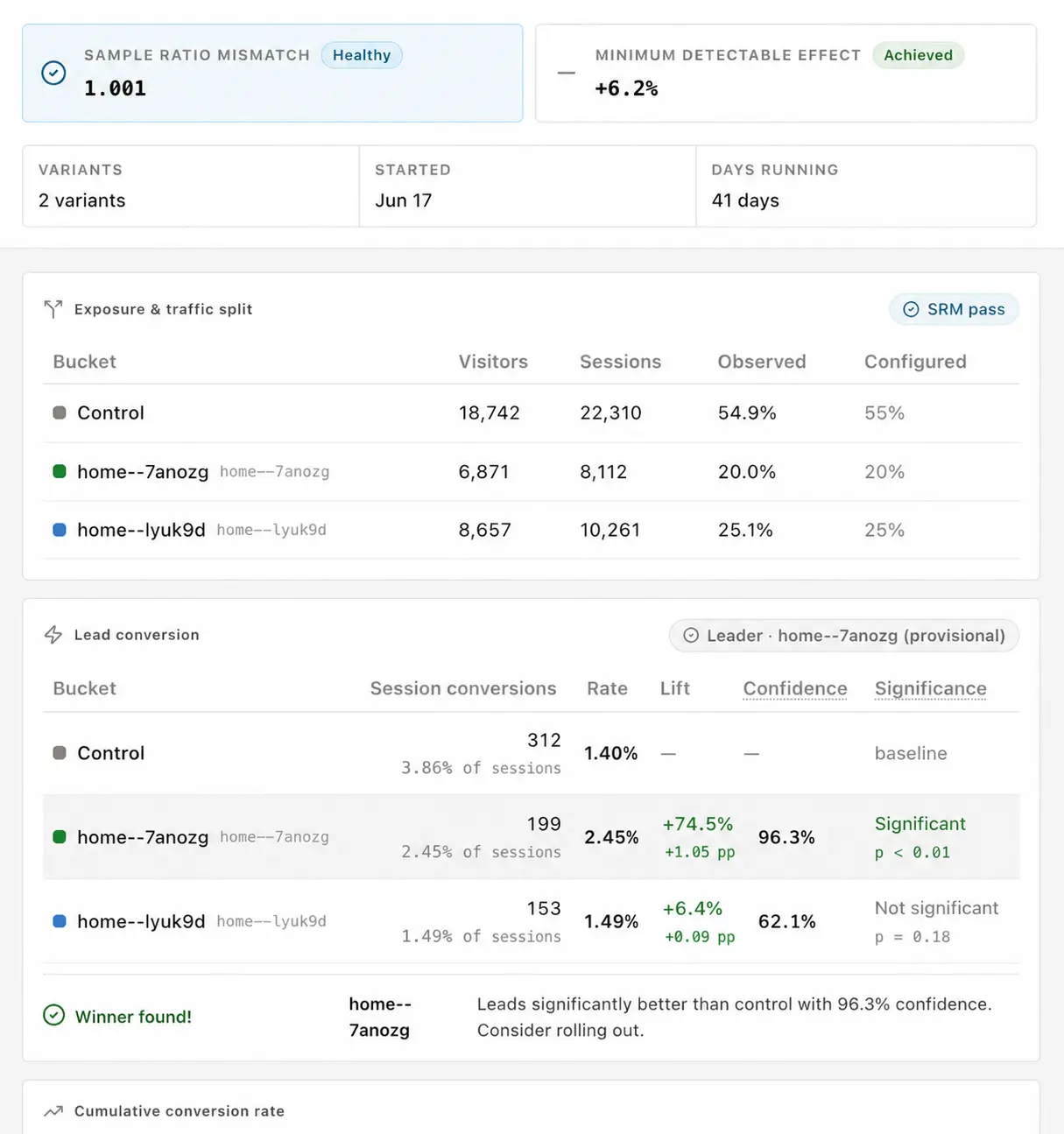 experiment stats for home
4. Update original page to match the winner and go again. Promote the version that won, then pick the next thing to improve. That’s the whole loop. Repeating it gives you snow ball effect of compounding growth.
This is exactly the game plan, when you want to increase conversion on your pages and website in general. Especially, when you can run those tests and experiments on autopilot with AI.
A/B testing best practices
The loop is simple, but these few things could compromise the results:
- Too little traffic. A “win” on a low-traffic page is often just noise. According to Discovered Labs, testing for a small 1-2% improvement needs up to 10x the sample size of a bigger change - so on modest traffic, test bold changes, not tiny tweaks, and wait for enough visitors.
- Stopping too early. Results swing in the first days and can flip. According to Searchlab’s 2026 CRO benchmarks, 60% of A/B tests are stopped before reaching statistical significance - which produces a false “winner” in roughly one out of five cases. Let the test run its course before you start analyzing results.
Do those two things and let the loop run.
Does it work with Contentful, Sanity, or WordPress?
One honest limitation. The A/B testing and analytics features are plugins, and they’re built for Payload CMS. Payload is a modern, developer-first CMS, end-to-end open source, no fees. These plugins are built specifically for Payload CMS and won’t port into other solutions like Sanity, Contentful, or WordPress. Contact and let us know if you would like to see it working with other CMS products.
So where does that leave you?
- Already on Payload? You’re set. The plugins are open-source and free - set them up and start testing. No license fees or limits.
- Starting something new? Ideal CMS gives you the whole feature set on day one, plus the rest of a production setup. It’s an open-source starter you can build on.
- You’re on another CMS? You can keep using your current CMS. Explore tools it has and how time and budget will it take in order to implement. If you would like to migrate to a modern stack with A/B tests, analytics, an more, we help teams migrate to Payload one-to-one.
Conclusion
- It’s critically important to run A/B tests and compound small improvements on the website over time. They can grow business significantly over time.
- Outdated tech stack and tools segmentation are real blockers when it comes to A/B tests and analytical insights.
- If you start a new project or plan migration to a new stack, consider Ideal CMS as a foundation. It’s future proof Content Management Platform you own and 100% control.
- Measure metrics when you run experiments. Metrics will help you make decisions based on data and not emotions.




.png&w=828&q=90)